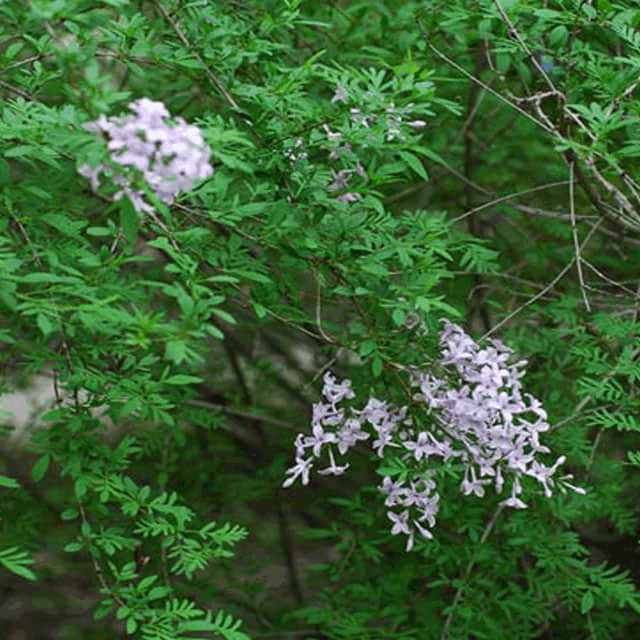
Why does your Syringa persica have white cottony spots? Diagnose the cause and fix it with our step-by-step guide.
These small, soft-bodied insects secrete a white, waxy substance that looks like cotton or fluff to protect themselves. They congregate in the leaf axils and crevices of the Persian Lilac, sucking sap and causing leaf yellowing.
This fungal disease manifests as a white, powdery coating on the surface of foliage, which can sometimes appear clumped or 'cottony' in high humidity. It thrives in the warm, moist conditions that Syringa persica often encounters during spring.
Certain species of scale insects produce thick, white, cotton-like masses around their bodies on the stems and leaves. This infestation can weaken the Persian Lilac by depleting its nutrient reserves.
These aphids are covered in a white, waxy secretion that gives them a cottony appearance. They often cluster on new, tender growth of the lilac, causing leaves to curl or deform.
Your plant might also be experiencing one of these issues:

 English
 Italiano