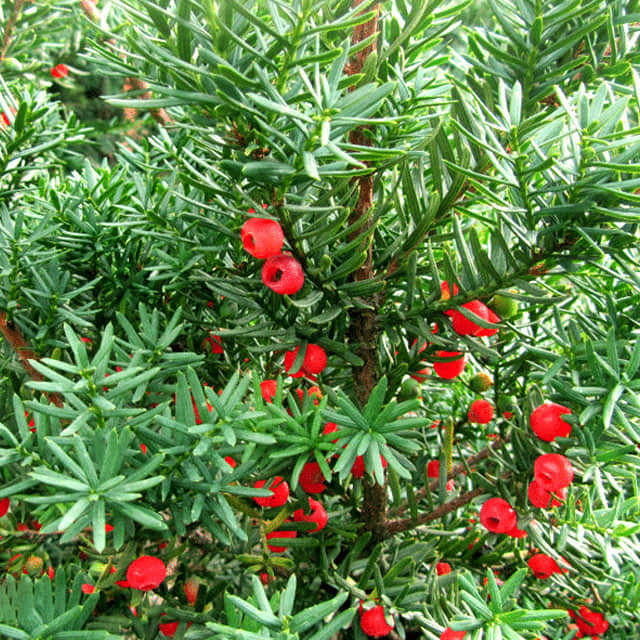
Why does your Taxus cuspidata have brown leaf tips? Diagnose the cause and fix it with our step-by-step guide.
Japanese Yews are highly sensitive to salt buildup in the substrate. Excessive nitrogen fertilizer or winter road salt spray causes osmotic stress, pulling moisture out of the needle tips and leaving them desiccated and brown.
While Taxus cuspidata prefers consistent moisture, prolonged periods of dry soil cause the plant to sacrifice the furthest extremities first. This results in characteristic needle tip necrosis.
Certain fungal pathogens thrive in high humidity and can cause dieback starting at the tips of the needles. This is often accompanied by small dark lesions on the stems.
Poorly draining soil leads to oxygen deprivation in the root zone, causing the roots of the Yew to decay. As the root system fails, the plant can no longer transport water to the tips, leading to browning.

 English
 Italiano