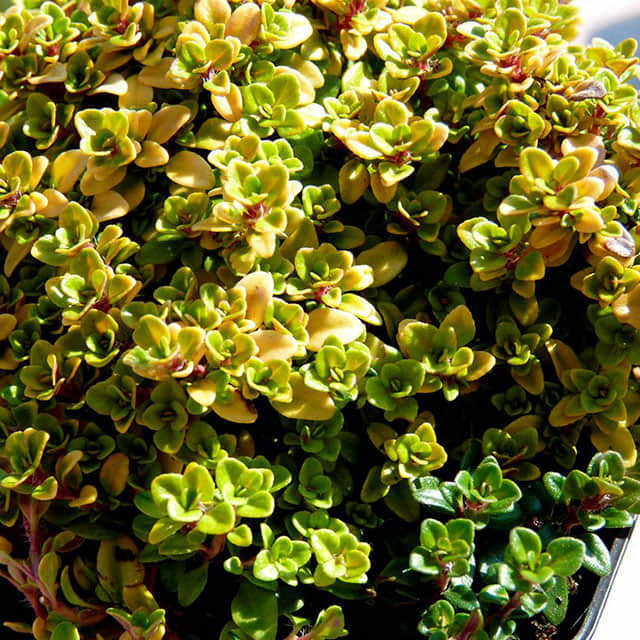
Thymus x citriodorus Drooping Leaves
eco Drooping Leaves

Thymus x citriodorus – Drooping Leaves

Why does your Thymus x citriodorus have drooping leaves? Diagnose the cause and fix it with our step-by-step guide.

pets Pet Friendly

search Possible Causes

error

Overwatering and Root Rot

Lemon thyme is highly susceptible to moisture-related issues. Excessively wet soil deprives roots of oxygen, leading to fungal pathogens like Phytophthora that cause the plant to lose turgor pressure and wilt.

Very Common
lightbulb
How to confirm: Stick your finger deep into the soil; if it feels soggy or smells musty, the roots are likely rotting.
build How to fix it
shopping_cart Recommended Products
1 Immediately remove the plant from its current container and trim away any mushy, black, or foul-smelling roots caused by rot.
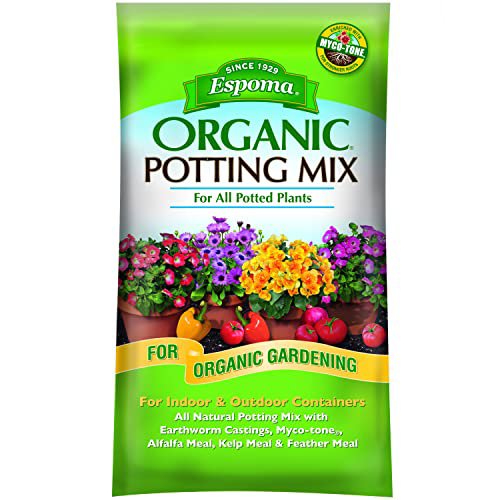
2 Repot the lemon thyme in a well-draining, fresh medium and add horticultural perlite to improve aeration and prevent future waterlogging.
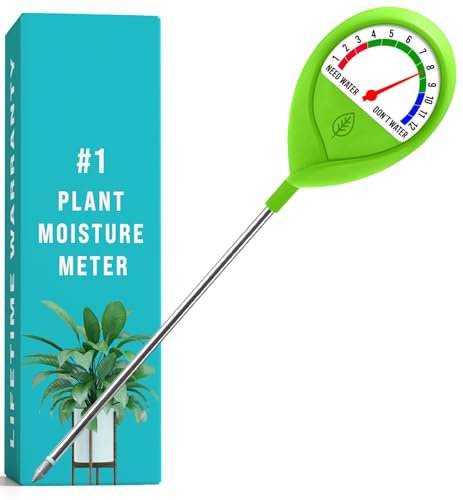
3 Use a moisture meter to monitor the soil, ensuring you only water when the top inch of soil is completely dry to avoid repeat overwatering.
error

Underwatering / Drought Stress

As a Mediterranean herb, Lemon Thyme prefers well-draining soil but requires consistent moisture to maintain leaf turgidity. Extreme dryness causes the stems and leaves to lose water faster than they can be replaced.

Very Common
lightbulb
How to confirm: Check if the soil is bone dry and pull gently on a stem to see if it feels brittle or limp.
build How to fix it
shopping_cart Recommended Products
1 Immediately check the soil moisture level using a probe to confirm the depth of the drought stress.
2 Deeply water the plant until water flows out of the drainage holes, ensuring the entire root ball is rehydrated.
3 To prevent future drought stress, ensure the plant is in a well-draining medium and consider using a moisture meter to maintain consistent hydration.
warning

Root Bound Conditions

If grown in a small pot for too long, the root mass of the Thyme can become so dense that there is no longer enough substrate to hold moisture, causing rapid wilting cycles.

Common
lightbulb
How to confirm: Gently lift the plant from its pot to see if roots are circling tightly around the interior walls.
build How to fix it
shopping_cart Recommended Products
1 Repot your Lemon Thyme into a larger container to provide space for root expansion and more substrate for moisture retention.
2 Gently loosen the dense root mass and transplant into a fresh, well-draining potting mix to ensure proper aeration.
3 Use a moisture meter to monitor the new soil levels, as larger pots can take longer to dry out than the previous root-bound container.
warning

Extreme Heat or Sun Scorch

While Lemon Thyme loves sun, intense midday heat in container gardening can cause rapid transpiration that exceeds the plant's ability to pull water from the roots, resulting in temporary drooping.

Common
lightbulb
How to confirm: Observe if the drooping occurs only during the hottest part of the day and recovers by evening.
build How to fix it
shopping_cart Recommended Products
1 Move the container to a location with filtered sunlight or afternoon shade to protect the foliage from intense midday heat and prevent further sun scorch.
2 Monitor the soil moisture levels closely using a moisture meter to ensure the plant is not experiencing drought stress during heat waves.
3 Apply a light mulch or top dressing, such as perlite, to the soil surface to help retain moisture and regulate soil temperature around the roots.

Other Thymus x citriodorus problems

Your plant might also be experiencing one of these issues:

local_hospital All symptoms eco All plants with drooping leaves
favorite