Tradescantia pallida Drooping Leaves
eco Drooping Leaves

Tradescantia pallida – Drooping Leaves

Why does your Tradescantia pallida have drooping leaves? Diagnose the cause and fix it with our step-by-step guide.

search Possible Causes

error

Underwatering and Dehydration

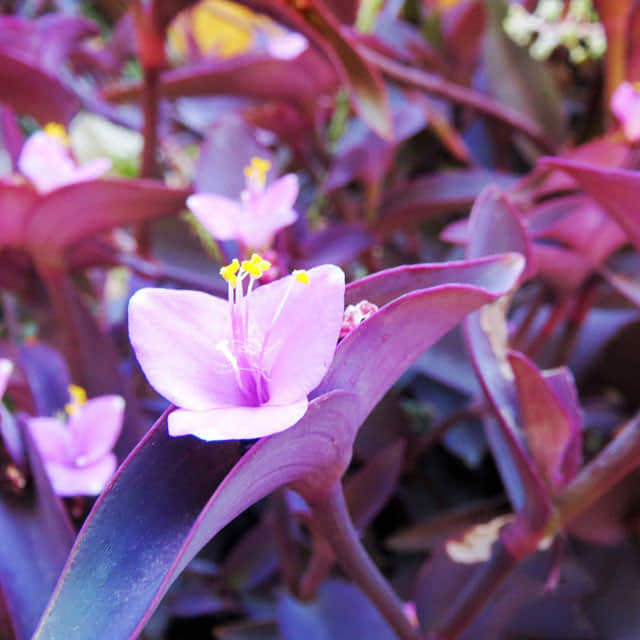
As a succulent-like perennial, Tradescantia pallida stores water in its fleshy stems. When soil is too dry for extended periods, the plant loses turgor pressure, causing the characteristic purple leaves to limp and sag.

Very Common
lightbulb
How to confirm: Stick your finger two inches into the soil; if it is bone dry, the drooping is likely due to thirst.
build How to fix it
shopping_cart Recommended Products
1 Immediately check the soil moisture level using a moisture meter to confirm the depth of dehydration.
2 Thoroughly soak the soil with water until it drains from the bottom of the pot to restore turgor pressure to the stems.
3 Ensure the plant is in a pot with proper drainage and use a saucer to catch excess water, preventing future waterlogging.
error

Root Rot from Overwatering

Excessive moisture in the substrate prevents oxygen from reaching the roots, leading to fungal decay. Once the root system fails, it can no longer transport water upward, causing the plant to wilt despite having wet soil.

Very Common
lightbulb
How to confirm: Gently lift the plant from its pot to check if the roots are dark, slimy, or emit a foul odor.
build How to fix it
shopping_cart Recommended Products
1 Immediately remove the plant from its current pot and discard the waterlogged soil to stop the decay process.
2 Prune away any mushy, black, or foul-smelling roots using sterilized shears and repot the plant in a well-draining, fresh medium.
3 Use a moisture meter to monitor the substrate and ensure you only water when the top inch of soil is dry to prevent future rot.
warning

Temperature Stress (Cold Shock)

Tradescantia pallida is sensitive to sudden drops in temperature. Exposure to drafts or temperatures below 50°F (10°C) can cause metabolic slowdown and cellular damage, leading to drooping and potential leaf drop.

Common
lightbulb
How to confirm: Check if the plant is located near a window, air conditioning vent, or an exterior-facing door.
build How to fix it
shopping_cart Recommended Products
1 Immediately move the plant to a warm, draft-free location with temperatures consistently above 60°F (15°C) to stabilize its metabolism.
2 Monitor the soil moisture closely, as cold stress can slow evaporation; use a moisture meter to ensure the soil is not staying too wet during this recovery period.
3 Avoid fertilizing the plant until you see new, upright growth, as adding nutrients during temperature-induced dormancy can cause further stress.
warning

Nutrient Deficiency (Nitrogen)

A lack of available nitrogen prevents the synthesis of chlorophyll and structural proteins. While the plant remains purple due to anthocyanins, the lack of structural integrity results in weak, drooping stems.

Common
lightbulb
How to confirm: Observe if the leaves are not only drooping but also turning a pale, washed-out purple or yellowish color.
build How to fix it
shopping_cart Recommended Products
1 Apply a nitrogen-rich liquid fertilizer to boost chlorophyll production and structural protein synthesis.
2 Check the soil moisture levels with a moisture meter to ensure the drooping isn't actually caused by underwatering.
3 Ensure the plant is receiving adequate bright, indirect light to support the energy required for nutrient uptake.

Other Tradescantia pallida problems

Your plant might also be experiencing one of these issues:

local_hospital All symptoms eco All plants with drooping leaves
favorite