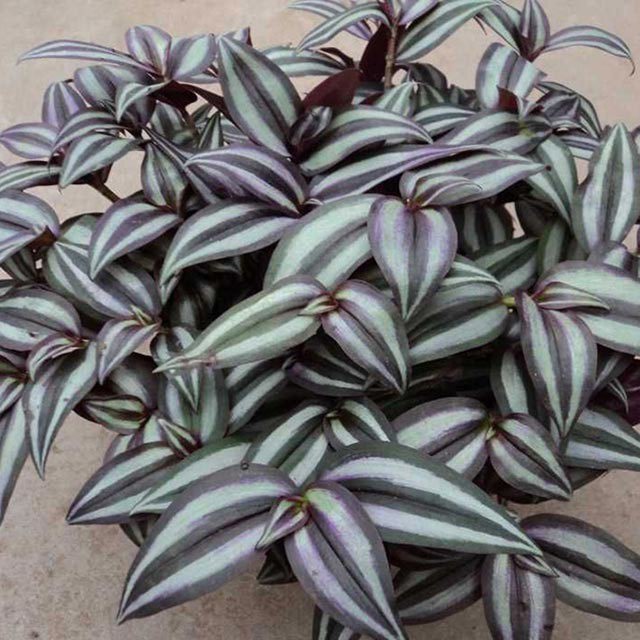
Tradescantia zebrina Drooping Leaves
eco Drooping Leaves

Tradescantia zebrina – Drooping Leaves

Why does your Tradescantia zebrina have drooping leaves? Diagnose the cause and fix it with our step-by-step guide.

search Possible Causes

error

Underwatering and Dehydration

Tradescantia zebrina has fleshy, succulent-like stems that rely on turgor pressure; when the soil dries out completely, the plant loses its ability to hold leaves upright.

Very Common
lightbulb
How to confirm: Stick your finger 1 inch into the soil to check if it is bone dry or significantly lighter in color than usual.
build How to fix it
shopping_cart Recommended Products
1 Immediately check the soil moisture level using a probe to confirm the depth of dehydration.
2 Thoroughly soak the soil by watering until water flows freely from the drainage holes, ensuring the root ball is fully saturated.
3 Ensure the plant is in a pot with proper drainage and use a saucer to catch excess water, preventing future dehydration from uneven watering.
error

Root Rot due to Overwatering

Excessive moisture causes the rhizomatous roots of this species to decay, preventing the plant from transporting water upward despite wet soil.

Very Common
lightbulb
How to confirm: Gently lift the plant from its pot to inspect if the roots are dark, slimy, or emitting a foul odor.
build How to fix it
shopping_cart Recommended Products
1 Immediately remove the plant from its current pot and discard the waterlogged soil to stop the decay process.
2 Trim away any mushy, black, or foul-smelling roots using sterilized shears and repot the plant in a well-draining, airy medium.
3 Use a moisture meter to monitor the soil and ensure you only water when the top inch of substrate is dry to prevent future rot.
warning

Temperature Stress (Cold Shock)

This species is sensitive to temperatures below 50°F (10°C), which can cause cellular collapse and immediate drooping of the foliage.

Common
lightbulb
How to confirm: Check if the plant is located near a drafty window, air conditioning vent, or in a room with fluctuating temperatures.
build How to fix it
shopping_cart Recommended Products
1 Immediately move the plant to a warmer location, ensuring the temperature remains consistently above 50°F (10°C) to prevent further cellular damage.
2 Avoid placing the plant near cold drafts, air conditioning vents, or unheated windows to stabilize the environment.
3 Monitor the soil moisture closely, as temperature fluctuations can alter evaporation rates; use a moisture meter to ensure the soil doesn't become waterlogged during recovery.
warning

Light Deprivation

Insufficient bright, indirect light can cause the stems to become 'leggy' and weak, losing the structural integrity needed to support leaf weight.

Common
lightbulb
How to confirm: Observe if the purple variegation is fading into a dull green color, which often accompanies low-light stress.
build How to fix it
shopping_cart Recommended Products
1 Move your Tradescantia zebrina to a location that receives bright, indirect sunlight to strengthen the stems and prevent further leggy growth.
2 If the plant is in a low-light corner, supplement its light exposure using a full-spectrum LED grow light to support structural integrity.
3 Prune the long, weak, leggy stems using sharp shears to encourage bushier growth and allow the plant to focus energy on new, stronger stems.

Other Tradescantia zebrina problems

Your plant might also be experiencing one of these issues:

local_hospital All symptoms eco All plants with drooping leaves
favorite