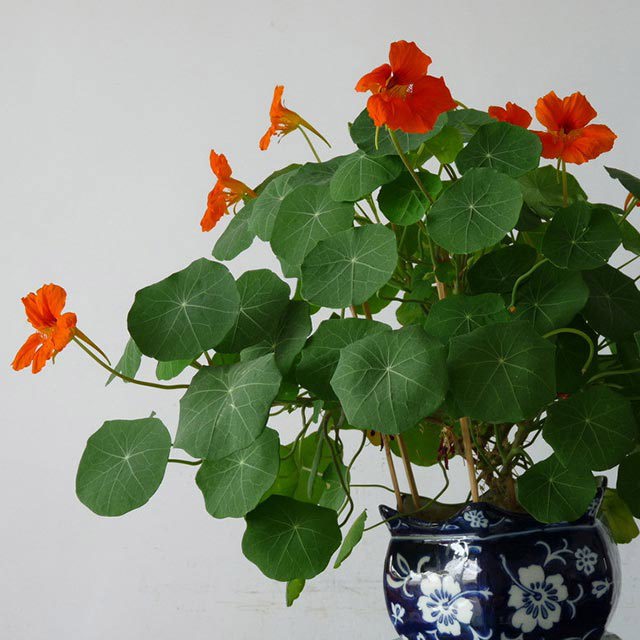
Why does your Tropaeolum majus have white cottony spots? Diagnose the cause and fix it with our step-by-step guide.
Pet FriendlyThese small insects secrete a white, waxy, cottony substance to protect themselves while feeding on the sap of the Nasturtium stems and leaf undersides. They can weaken the plant significantly by draining nutrients.
A fungal disease that manifests as white, flour-like patches on the surface of Nasturtium leaves. It thrives in high humidity and stagnant air around the foliage.
These scale insects produce a white, felt-like covering that resembles cotton. They attach to the stems of Tropaeolum majus and can cause leaf yellowing and stunted growth.
While less common, certain mite infestations can cause fine, web-like or cottony textures on the foliage of nectar-rich plants like Nasturtiums.

 English
 Italiano



