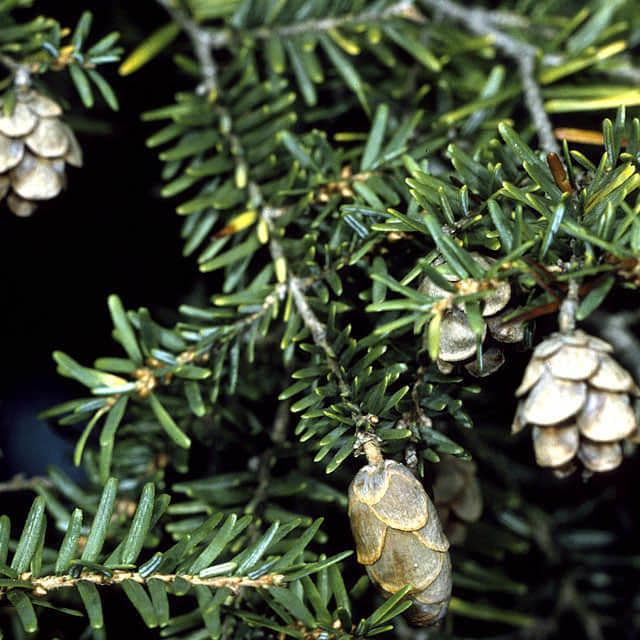
Why does your Tsuga canadensis have brown leaf tips? Diagnose the cause and fix it with our step-by-step guide.
Eastern Hemlocks have shallow root systems and are highly sensitive to dry conditions. When soil moisture is insufficient, the tree cannot transport water to the furthest extremities, causing the branch tips to desiccate first.
Hemlocks are susceptible to chloride toxicity, especially near roadsides in winter. Salt accumulation in the needles causes osmotic stress that manifests as browning at the leaf tips.
While HWA typically causes needle loss and twig swelling, early-stage feeding can disrupt nutrient flow, leading to localized browning of the needle tips.
Heavy soil compaction restricts oxygen availability to the shallow roots of Tsuga canadensis. This physiological stress prevents efficient nutrient uptake, leading to tip necrosis.

 English
 Italiano