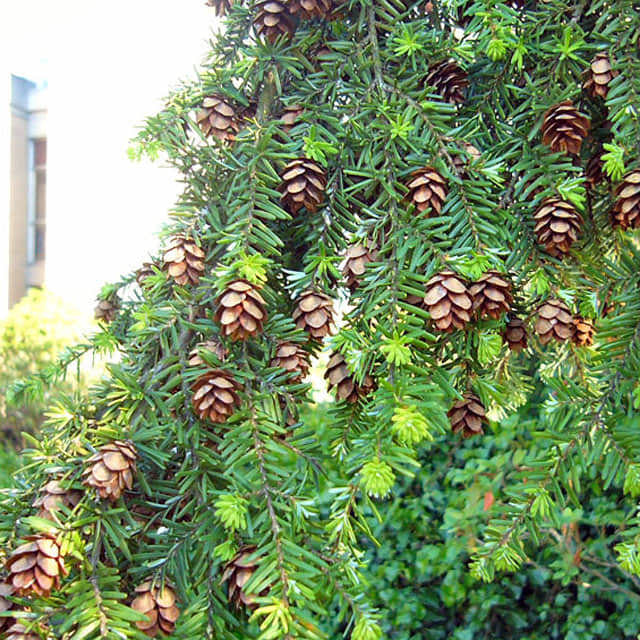
Why does your Tsuga heterophylla have brown leaf tips? Diagnose the cause and fix it with our step-by-step guide.
Western Hemlock is highly sensitive to moisture deficits. When the soil dries out, the plant cannot transport enough water to the extremities, causing the delicate needle tips to desiccate and turn brown.
This species is sensitive to high chloride levels from road salts or hard water. Salt buildup in the foliage draws moisture out of the needles via osmosis, resulting in characteristic tip necrosis.
Excessive soil moisture in heavy clay soils can lead to fungal pathogens attacking the root system. As roots decay, the tree's ability to supply water to the needles is compromised, leading to tip browning.
A lack of mobile nutrients can cause chlorosis that eventually progresses to necrosis at the needle tips. This is common in highly leached, acidic soils where nutrient availability is disrupted.

 English
 Italiano