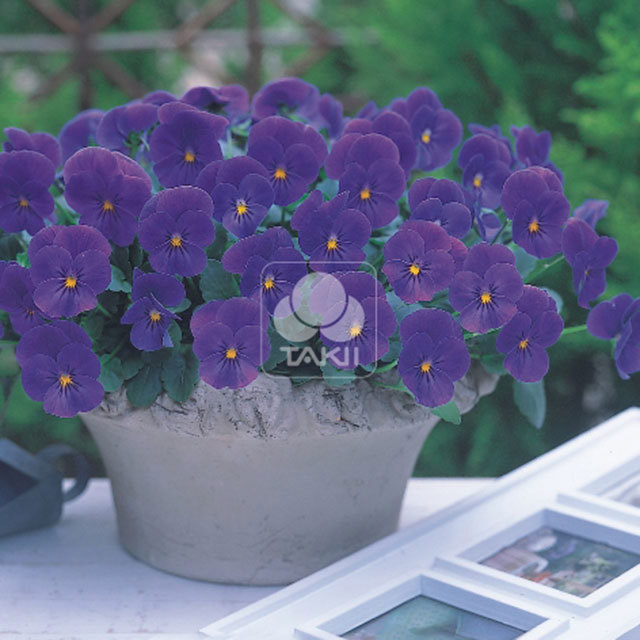
Viola cornuta Four Seasons F1 Blue White Cottony Spots
eco White Cottony Spots

Viola cornuta Four Seasons F1 Blue – White Cottony Spots

Why does your Viola cornuta Four Seasons F1 Blue have white cottony spots? Diagnose the cause and fix it with our step-by-step guide.

pets Pet Friendly

search Possible Causes

error

Mealybug Infestation

Mealybugs are small, soft-bodied insects that secrete a white, waxy, cottony substance to protect themselves. They cluster in the tight crevices of Viola cornuta leaves and flower buds, sucking sap and weakening the plant.

Very Common
lightbulb
How to confirm: Use a magnifying glass or smartphone zoom to check if the white spots move or are attached to small, insect-like bodies near leaf axils.
build How to fix it
shopping_cart Recommended Products
1 Isolate the plant immediately to prevent the mealybugs from spreading to your other houseplants.
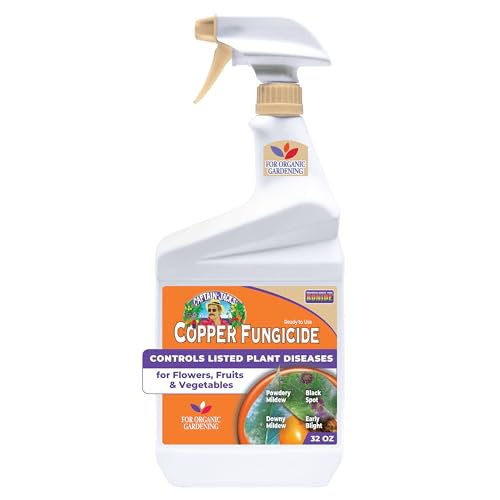
2 Treat the infestation by spraying the plant thoroughly with an organic insecticide/miticide to kill the insects and remove the waxy coating.
3 Use a cotton swab dipped in rubbing alcohol to manually remove any visible white cottony clusters from leaf crevices and buds.
error

Powdery Mildew

This fungal disease manifests as white, flour-like patches on the surface of Viola foliage. It thrives in high humidity and poor air circulation around the dense clumps of Horned Violet.

Very Common
lightbulb
How to confirm: Observe if the white spots look like a dusting of powder that can be rubbed off the leaf surface with your finger.
build How to fix it
shopping_cart Recommended Products
1 Apply an organic fungicide to the affected foliage to eliminate the powdery mildew spores and prevent further spread.
2 Improve air circulation around the plant by thinning out dense foliage and ensuring the plant is not in a high-humidity pocket.
3 Prune and dispose of heavily infected leaves to reduce the fungal load on the remaining healthy plant tissue.
warning

Cottony Blight (Sclerotinia)

While less common, certain species of Sclerotinia can cause white, fuzzy mycelium to appear on decaying plant tissue. In Violas, this often starts at the base of the stems near the soil line.

Common
lightbulb
How to confirm: Inspect the base of the stems for any signs of soft, water-soaked rot accompanied by the white fuzz.
build How to fix it
shopping_cart Recommended Products
1 Immediately prune and dispose of all infected plant tissue and decaying stems to prevent the fungal mycelium from spreading to healthy parts of the Viola.
2 Apply an organic fungicide to the affected area to control the spread of the blight.
3 Improve air circulation around the base of the plant and ensure the soil surface stays dry to create an environment less hospitable to Sclerotinia.

Other Viola cornuta Four Seasons F1 Blue problems

Your plant might also be experiencing one of these issues:

local_hospital All symptoms eco All plants with white cottony spots
favorite