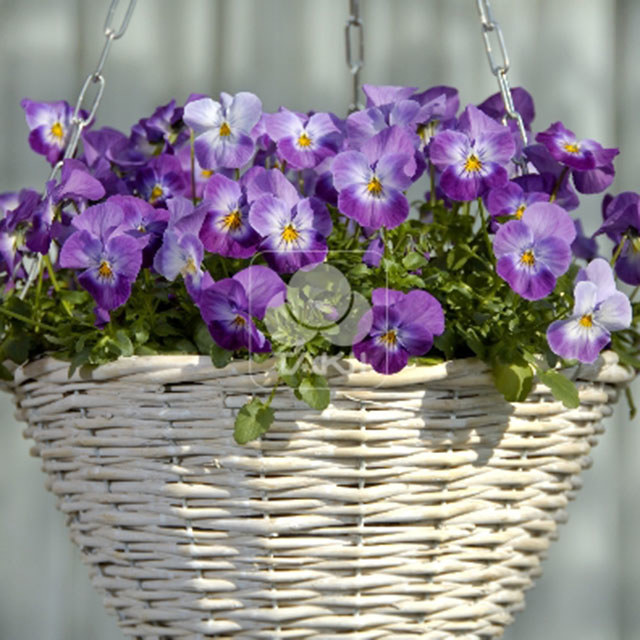
Viola cornuta Four Seasons F1 Lilac Rose White Cottony Spots
eco White Cottony Spots

Viola cornuta Four Seasons F1 Lilac Rose – White Cottony Spots

Why does your Viola cornuta Four Seasons F1 Lilac Rose have white cottony spots? Diagnose the cause and fix it with our step-by-step guide.

pets Pet Friendly

search Possible Causes

error

Mealybugs

These small, sap-sucking insects produce a white, waxy, cottony secretion to protect themselves. They tend to congregate in the crevices of the Viola's leaf axils and near the base of the stems.

Very Common
lightbulb
How to confirm: Use a magnifying glass to look for tiny, slow-moving insects hidden under the leaves or at the stem junctions.
build How to fix it
shopping_cart Recommended Products
1 Isolate the plant immediately to prevent the mealybugs from spreading to your other houseplants.
2 Treat the infestation by spraying the plant with an organic insecticide/miticide to kill the insects and their waxy secretions.
3 Use a cotton swab dipped in isopropyl alcohol to manually remove visible white cottony clusters from the leaf axils and stem bases.
error

Powdery Mildew

A fungal disease that manifests as white, flour-like patches on the surface of the Viola leaves. It thrives in high humidity and stagnant air around the dense foliage of the Four Seasons series.

Very Common
lightbulb
How to confirm: Check if the white spots appear flat against the leaf surface and if they spread across the leaf blade rather than being raised clumps.
build How to fix it
shopping_cart Recommended Products
1 Apply an organic fungicide to eliminate existing fungal spores and prevent the spread of the mildew.
2 Improve air circulation around the dense foliage by pruning away heavily infected leaves and ensuring the plant is not crowded.
3 Reduce humidity levels by avoiding overhead watering and ensuring the soil surface stays dry between waterings.
warning

Cottony Blotch (Botrytis)

Early stages of Botrytis cinerea can present as fuzzy, grayish-white patches on dying tissue or flower buds. This is particularly common in Viola cornuta if moisture lingers on the petals overnight.

Common
lightbulb
How to confirm: Inspect whether the white patches are accompanied by brown, decaying floral tissue or stem lesions.
build How to fix it
shopping_cart Recommended Products
1 Remove and discard all affected flower buds and decaying plant tissue to prevent the fungal spores from spreading to healthy parts of the Viola.
2 Apply an organic fungicide to control the spread of the Botrytis blight.
3 Improve air circulation around the plant and avoid overhead watering to ensure petals and leaves dry quickly after moisture exposure.
warning

White Mold (Sclerotinia)

While less common, this fungus can produce a white, cottony growth around the base of the plant or on stems during periods of excessive soil moisture.

Common
lightbulb
How to confirm: Examine the stem base for any signs of softening or the presence of small, black, seed-like sclerotia.
build How to fix it
shopping_cart Recommended Products
1 Reduce watering frequency and ensure the soil surface dries out between waterings to eliminate the excessive moisture fueling the mold.
2 Apply an organic fungicide to the affected areas to control the spread of the white mold.
3 Improve airflow around the base of the plant and consider repotting into a well-draining medium with added perlite to prevent future moisture buildup.

Other Viola cornuta Four Seasons F1 Lilac Rose problems

Your plant might also be experiencing one of these issues:

local_hospital All symptoms eco All plants with white cottony spots
favorite



