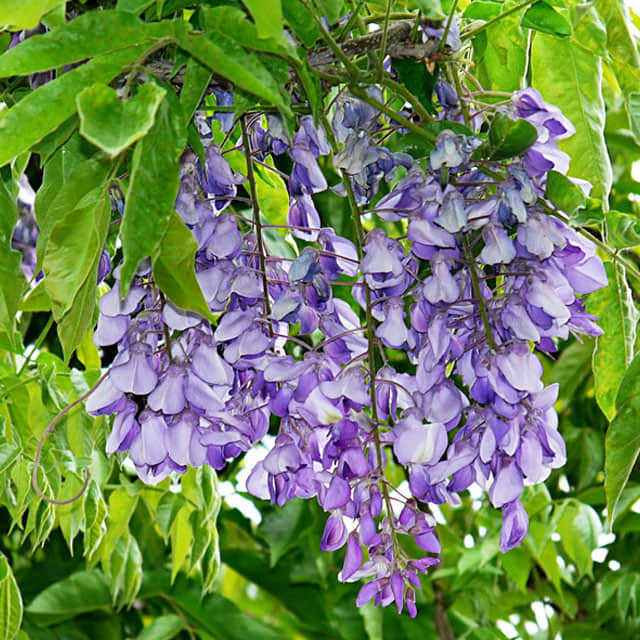
Wisteria sinensis Sims Drooping Leaves
eco Drooping Leaves

Wisteria sinensis Sims – Drooping Leaves

Why does your Wisteria sinensis Sims have drooping leaves? Diagnose the cause and fix it with our step-by-step guide.

search Possible Causes

error

Water Stress (Drought or Waterlogging)

Wisteria requires consistent moisture but is highly susceptible to root suffocation in heavy soil. Drooping occurs when roots are either too dry to transport water or too saturated to facilitate oxygen exchange.

Very Common
lightbulb
How to confirm: Stick your finger two inches into the soil; if it's bone dry, it needs water, but if it's muddy, you are overwatering.
build How to fix it
shopping_cart Recommended Products
1 Check the soil moisture level at the root zone using a moisture meter to determine if the plant is suffering from drought or waterlogging.
2 If the soil is bone dry, provide a deep, slow watering session; if the soil is saturated, ensure the plant is in a well-draining environment or repot with added perlite to prevent root rot.
3 Ensure the plant is in a container with adequate drainage, such as a Root & Vessel pot with an integrated tray, to prevent water from pooling at the base.
error

Heat Stress and Transpiration Imbalance

During extreme temperature spikes, Wisteria leaves may wilt to reduce surface area and minimize water loss through transpiration. This is often temporary and occurs during the hottest part of the day.

Very Common
lightbulb
How to confirm: Observe if the leaves recover and perk up once the sun goes down or during cooler morning hours.
build How to fix it
shopping_cart Recommended Products
1 Provide temporary shade during peak afternoon heat to reduce the plant's temperature and minimize water loss.
2 Monitor soil moisture levels closely to ensure the plant has adequate hydration to support transpiration during heat waves.
3 Apply a mulch layer around the base of the plant to help regulate soil temperature and retain moisture.
warning

Root Rot (Phytophthora or Pythium)

Chronic overwatering in poorly drained sites leads to fungal pathogens attacking the woody root system of the Wisteria. As roots decay, they lose the ability to support the heavy vine structure and foliage.

Common
lightbulb
How to confirm: Gently lift a small section of soil near the main stem to check for dark, foul-smented, or slimy roots.
build How to fix it
shopping_cart Recommended Products
1 Immediately reduce watering frequency and ensure the plant is in a location with excellent drainage to stop the spread of fungal pathogens.
2 Repot the Wisteria into a container with superior drainage or amend the existing soil with perlite to increase aeration and prevent future waterlogging.
3 Prune away any mushy, blackened, or decaying roots using sterilized shears to prevent further rot from spreading to the healthy woody structure.
warning

Nutrient Deficiency (Nitrogen or Iron)

Inadequate nitrogen or iron uptake, common in highly alkaline soils, can cause leaves to lose turgor and turn chlorotic. This weakens the vine's ability to maintain structural leaf rigidity.

Common
lightbulb
How to confirm: Check if the drooping is accompanied by yellowing between the veins (interveinal chlorosis) on newer leaves.
build How to fix it
shopping_cart Recommended Products
1 Apply a nitrogen-rich organic fertilizer to boost leaf vigor and chlorophyll production.
2 Check soil pH levels to ensure the environment is not too alkaline, which prevents iron uptake.
3 Amend the soil with organic matter like worm castings to improve nutrient availability and soil structure.

Other Wisteria sinensis Sims problems

Your plant might also be experiencing one of these issues:

local_hospital All symptoms eco All plants with drooping leaves
favorite