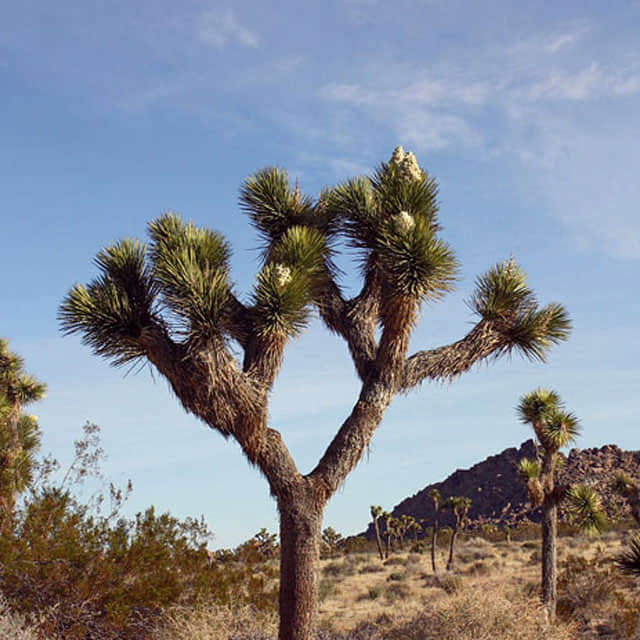
Yucca brevifolia Yellow Leaves
eco Yellow Leaves

Yucca brevifolia – Yellow Leaves

Why does your Yucca brevifolia have yellow leaves? Diagnose the cause and fix it with our step-by-step guide.

search Possible Causes

error

Overwatering and Root Rot

Joshua Trees are highly adapted to arid environments and cannot tolerate saturated substrate. Excessive moisture leads to anaerobic conditions in the soil, causing fungal pathogens like Phytophthora to rot the root system, which manifests as yellowing leaves.

Very Common
lightbulb
How to confirm: Check if the base of the stem is soft or mushy and if the soil remains damp for several days after watering.
build How to fix it
shopping_cart Recommended Products
1 Immediately remove the plant from its current container and inspect the roots for any mushy, dark, or foul-smelling rot; prune away all decayed root tissue using sterilized tools.
2 Repot the Joshua Tree in a well-draining, gritty substrate specifically designed for arid plants, incorporating perlite to increase aeration and prevent future waterlogging.
3 Switch to a more porous container with excellent drainage and use a moisture meter to ensure the soil is completely dry before the next watering session.
warning

Nutrient Deficiency (Nitrogen)

In nutrient-poor desert soils, a lack of nitrogen can cause older leaves to lose chlorophyll and turn yellow. This often starts with the lower, older leaves of the Yucca plant before progressing upward.

Common
lightbulb
How to confirm: Observe if the yellowing is progressing from the oldest, lowest leaves toward the center of the rosette.
build How to fix it
shopping_cart Recommended Products
1 Apply a nitrogen-rich organic fertilizer to the soil to restore chlorophyll production and green up the foliage.
2 Check the soil moisture levels with a meter to ensure the nitrogen is being absorbed and not being leached away by overwatering.
3 Prune away the most severely yellowed lower leaves to prevent the plant from wasting energy on dying tissue.
warning

Temperature Stress (Extreme Cold)

While Joshua Trees are hardy, sudden frost or prolonged temperatures below freezing can damage cell membranes in the leaf tissue, leading to chlorosis and subsequent browning.

Common
lightbulb
How to confirm: Check if there was a recent significant drop in temperature or a frost event in your local area.
build How to fix it
shopping_cart Recommended Products
1 Immediately move the plant to a sheltered location or indoors to protect it from further freezing temperatures.
2 Apply a warming mulch or insulating layer around the base of the plant to stabilize soil temperatures.
3 Monitor soil moisture closely to ensure the plant is not overwatered while in a dormant, cold state, using a moisture meter to prevent root rot.
warning

Sunscald

If a Joshua Tree has been moved from shade to intense, direct desert sunlight too quickly, the sudden UV intensity can bleach the leaf tissue, causing them to appear pale or yellow.

Common
lightbulb
How to confirm: Look for yellowing specifically on the side of the plant most exposed to the afternoon sun.
build How to fix it
shopping_cart Recommended Products
1 Gradually acclimate the plant to higher light intensities by moving it to a shaded area first, then slowly increasing sun exposure over several weeks.
2 Provide temporary relief from intense UV rays using a shade cloth or by moving the plant to a location with filtered sunlight until it recovers.
3 Monitor the soil moisture levels to ensure the plant is not also experiencing drought stress, which can exacerbate sunscald symptoms.
local_hospital All symptoms eco All plants with yellow leaves
favorite