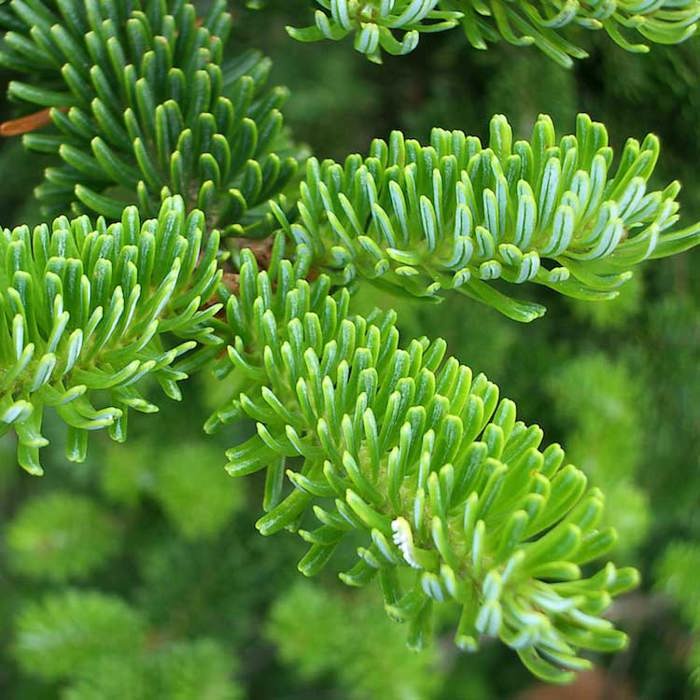
Abies fraseri Fine Webbing
eco Fine Webbing

Abies fraseri – Fine Webbing

Why does your Abies fraseri have fine webbing? Diagnose the cause and fix it with our step-by-step guide.

pets Pet Friendly

search Possible Causes

error

Spruce Spider Mites (Macrosiphum euphorbiae/Tetranychidae)

These tiny arachnids thrive in warm, dry conditions and feed on the needles of Fraser Firs, secreting silk that forms characteristic fine webbing. The feeding process causes needle discoloration and premature needle drop.

Very Common
lightbulb
How to confirm: Tap a branch over a white piece of paper; if tiny crawling dots emerge, you have mites.
build How to fix it
shopping_cart Recommended Products
1 Apply an organic insecticide spray to the foliage to eliminate existing spider mites and their eggs.
2 Increase humidity around the tree and avoid warm, dry air, as spider mites thrive in arid environments.
3 Regularly inspect the undersides of needles and use a strong stream of water to physically wash away webbing and mites.
warning

Adelgids (e.g., Fraser Fir Adelgid)

While primarily known for causing swelling on needles or twigs, certain adelgid infestations can result in secondary silk-like secretions or fine webbing as the colony grows. This leads to stunted growth and needle browning.

Common
lightbulb
How to confirm: Inspect the undersides of new growth needles for tiny, waxy, or white scale-like organisms.
build How to fix it
shopping_cart Recommended Products
1 Apply an organic insecticide spray to eliminate the adelgid colony and prevent further needle browning.
2 Prune and carefully dispose of heavily infested or dead branches to reduce the pest population and improve airflow.
3 Monitor the tree's hydration levels using a moisture meter to ensure the tree remains resilient against environmental stress.
warning

Tussock Moth Larvae

The larvae of certain moth species produce fine silk webbing as they move and build communal shelters on the foliage. While the primary symptom is visible caterpillars, the webbing can be quite prominent on conifer branches.

Common
lightbulb
How to confirm: Look for small, hairy caterpillars hidden within the webbed areas of the needles.
build How to fix it
shopping_cart Recommended Products
1 Inspect the foliage closely for caterpillars and manually remove any visible larvae or large clusters of webbing from the branches.
2 Apply an organic insecticide spray to the affected areas to eliminate remaining larvae and prevent further infestation.
3 Prune away heavily infested branches that cannot be salvaged to prevent the spread of the larvae to healthy parts of the tree.

Other Abies fraseri problems

Your plant might also be experiencing one of these issues:

local_hospital All symptoms eco All plants with fine webbing
favorite