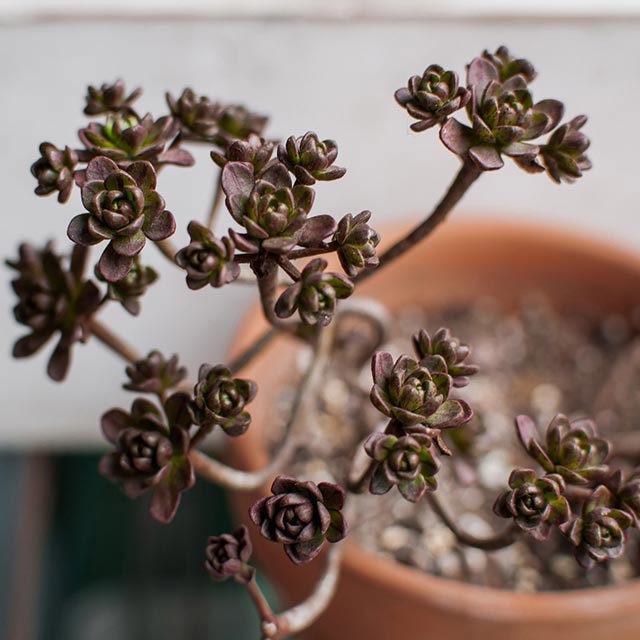
Aeonium sedifolium Drooping Leaves
eco Drooping Leaves

Aeonium sedifolium – Drooping Leaves

Why does your Aeonium sedifolium have drooping leaves? Diagnose the cause and fix it with our step-by-step guide.

pets Pet Friendly

search Possible Causes

error

Overwatering and Root Rot

Aeonium sedifolium are succulents that store water in their leaves; excessive moisture causes the roots to decay, preventing the plant from absorbing water and resulting in limp, drooping foliage. This is the most common cause of leaf loss or drooping in this species.

Very Common
lightbulb
How to confirm: Gently tug on a stem to see if it feels loose and check if the soil remains damp for more than a week.
build How to fix it
shopping_cart Recommended Products
1 Immediately remove the plant from its current soil and inspect the roots for any mushy, black, or foul-smelling decay; trim away all rotted sections using sterilized tools.
2 Repot the plant in a fresh, well-draining succulent substrate and ensure the new container has excellent drainage to prevent future water accumulation.
3 Use a soil moisture meter to monitor the substrate, ensuring you only water when the soil is completely dry to avoid repeating the overwatering cycle.
error

Underwatering / Dehydration

When the growing medium becomes too dry, the plant uses its stored water reserves to survive, leading to loss of turgor pressure in the leaves. This causes the characteristic 'wilting' appearance as the cells deflate.

Very Common
lightbulb
How to confirm: Check if the soil is pulling away from the edges of the pot and feel if the leaves are thin or wrinkled.
build How to fix it
shopping_cart Recommended Products
1 Check the soil moisture level immediately using a moisture meter to confirm the depth of dehydration.
2 Thoroughly soak the growing medium with water until it is fully saturated, ensuring the water reaches the root zone.
3 Ensure the plant is in a well-draining container to prevent water from pooling, which could lead to rot once rehydrated.
warning

Temperature Stress (Heat Exhaustion)

While Aeoniums enjoy sunlight, extreme heat spikes can cause the plant to enter a semi-dormant state or suffer from transpiration stress, leading to temporary drooping during peak daylight hours.

Common
lightbulb
How to confirm: Observe if the leaves perk up significantly during the cooler evening or early morning hours.
build How to fix it
shopping_cart Recommended Products
1 Move the plant to a cooler, shaded location during peak daylight hours to protect it from extreme heat spikes.
2 Monitor soil moisture levels closely to ensure the plant is not drying out too quickly during heat waves.
3 Apply a light mulch or top dressing to help regulate soil temperature and retain moisture around the roots.
warning

Nutrient Deficiency (Nitrogen)

A lack of essential macronutrients like nitrogen can weaken the cellular structure of the rosette, making the leaves unable to hold their upright shape.

Common
lightbulb
How to confirm: Look for a pale, yellowish tint on the older leaves in addition to the drooping symptom.
build How to fix it
shopping_cart Recommended Products
1 Apply a nitrogen-rich organic fertilizer to boost the plant's cellular strength and foliage vigor.
2 Use a soil moisture meter to ensure the drooping isn't actually caused by overwatering, which can mimic nutrient deficiency symptoms.
3 Ensure the Aeonium is receiving adequate bright, indirect sunlight to support nutrient uptake and photosynthesis.

Other Aeonium sedifolium problems

Your plant might also be experiencing one of these issues:

local_hospital All symptoms eco All plants with drooping leaves
favorite