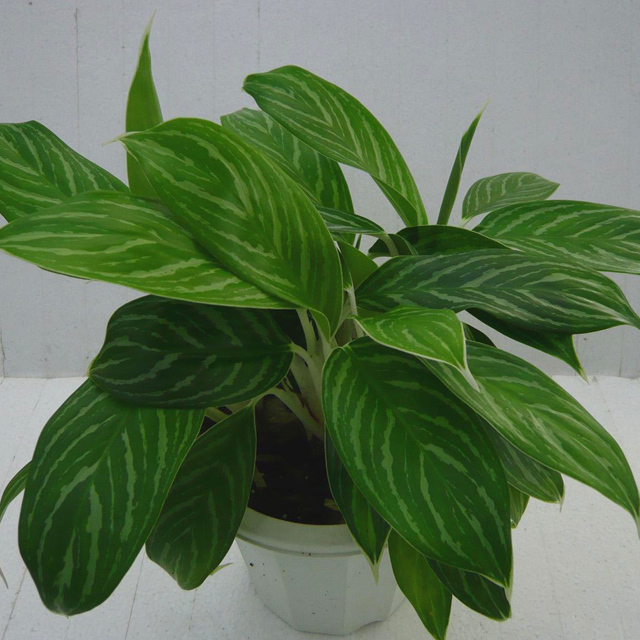
Why does your Aglaonema commutatum Pseudobracteatum have yellow leaves? Diagnose the cause and fix it with our step-by-step guide.
Aglaonema species are highly susceptible to fungal pathogens like Phytophthora when soil remains saturated. Excess moisture deprives roots of oxygen, leading to cell death and the characteristic yellowing of older leaves.
A lack of nitrogen prevents the production of chlorophyll in Aglaonema leaves. This typically manifests as a uniform yellowing that begins on older, lower foliage and progresses upward.
While Aglaonema is shade-tolerant, extremely low light levels inhibit photosynthesis. The plant may shed older leaves by turning them yellow to conserve energy for newer growth.
Aglaonema are tropical plants that thrive in warmth; exposure to drafts or temperatures below 60°F (15°C) can cause physiological stress and chlorosis.
Your plant might also be experiencing one of these issues:

 English
 Italiano