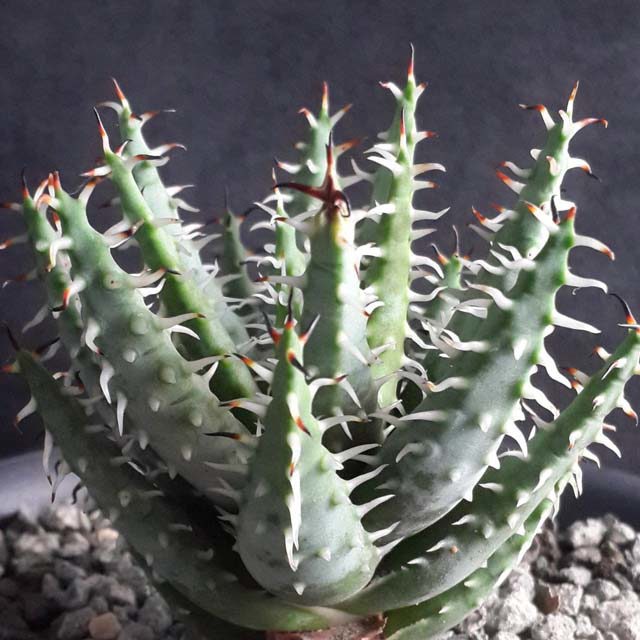
Aloe erinacea Drooping Leaves
eco Drooping Leaves

Aloe erinacea – Drooping Leaves

Why does your Aloe erinacea have drooping leaves? Diagnose the cause and fix it with our step-by-step guide.

search Possible Causes

error

Overwatering and Root Rot

Aloe erinacea is a succulent adapted to arid environments; excessive soil moisture causes the roots to decay, preventing the plant from transporting water to its leaves. This leads to turgor loss and characteristic drooping.

Very Common
lightbulb
How to confirm: Gently lift the plant from its pot to check if the roots are dark, slimy, or have a foul odor.
build How to fix it
shopping_cart Recommended Products
1 Immediately remove the plant from its current pot and inspect the roots for any mushy, dark, or foul-smelling decay; trim away all rot using sterilized tools.
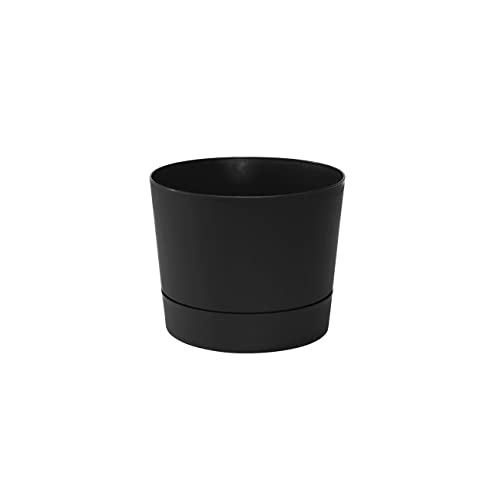
2 Repot the Aloe erinacea in a fresh, well-draining succulent mix and use a container with excellent drainage, such as a Root & Vessel cylinder pot, to prevent future water pooling.
3 Amend the new soil with perlite to increase aeration and prevent soil compaction, which helps keep the root zone oxygenated.
error

Dehydration (Underwatering)

In extreme drought conditions, the plant uses its internal water reserves to survive, causing the fleshy leaves to lose volume and sag. Unlike rot, the leaves will feel thin and potentially wrinkled.

Very Common
lightbulb
How to confirm: Check the moisture level deep in the substrate; if it is bone dry and the leaves feel lightweight, water is needed.
build How to fix it
shopping_cart Recommended Products
1 Immediately check the soil moisture level using a probe to confirm the depth of dehydration.
2 Thoroughly soak the soil with water until it drains from the bottom, ensuring the root ball is fully saturated.
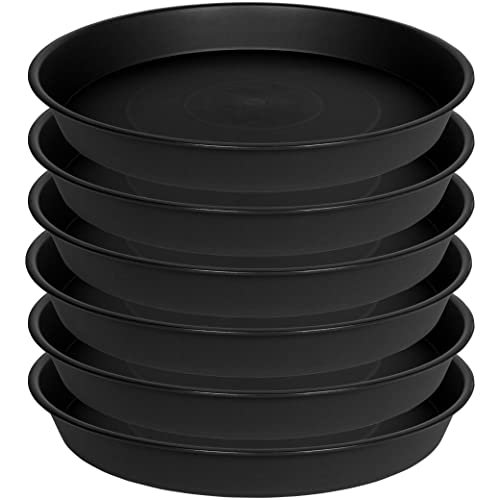
3 Ensure the plant is in a well-draining container with a saucer to prevent water from pooling at the base.
warning

Temperature Stress (Cold Shock)

As a species that prefers warm climates, exposure to temperatures below 50°F (10°C) can cause physiological shock. This metabolic slowdown results in temporary leaf drooping and loss of rigidity.

Common
lightbulb
How to confirm: Check if the plant has been recently exposed to drafts from windows or sudden drops in nighttime temperature.
build How to fix it
shopping_cart Recommended Products
1 Immediately move the plant to a warmer environment, ensuring temperatures remain consistently above 50°F (10°C) to allow the plant to recover from metabolic shock.
2 Avoid watering the plant until the soil has dried out and the temperature has stabilized, as cold, wet soil can exacerbate root rot during temperature stress.
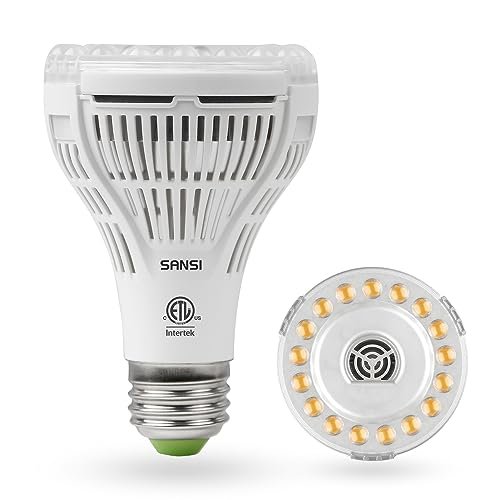
3 If the plant is in a drafty area, use a grow light to provide supplemental warmth and consistent light energy to help stimulate recovery.
warning

Nutrient Deficiency (Nitrogen)

A lack of nitrogen prevents the development of strong cell walls and chlorophyll, making the structural integrity of the succulent leaves weak. This results in a pale, limp appearance.

Common
lightbulb
How to confirm: Observe if the drooping is accompanied by a distinct yellowing of the older, lower leaves.
build How to fix it
shopping_cart Recommended Products
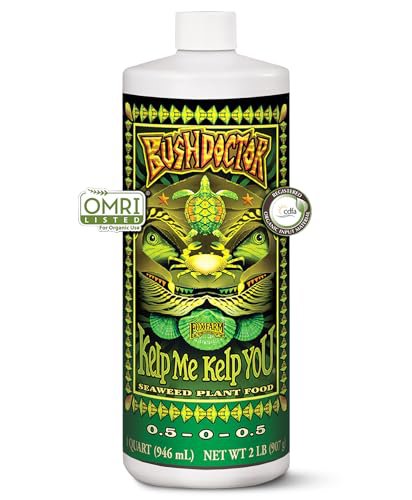
1 Apply a nitrogen-rich organic fertilizer to boost chlorophyll production and strengthen cell walls.
2 Check the soil moisture levels with a meter to ensure the drooping isn't actually caused by overwatering, which can mimic nitrogen deficiency symptoms.
3 Ensure the Aloe is planted in a well-draining medium, such as a mix containing perlite, to prevent root rot.

Other Aloe erinacea problems

Your plant might also be experiencing one of these issues:

local_hospital All symptoms eco All plants with drooping leaves
favorite