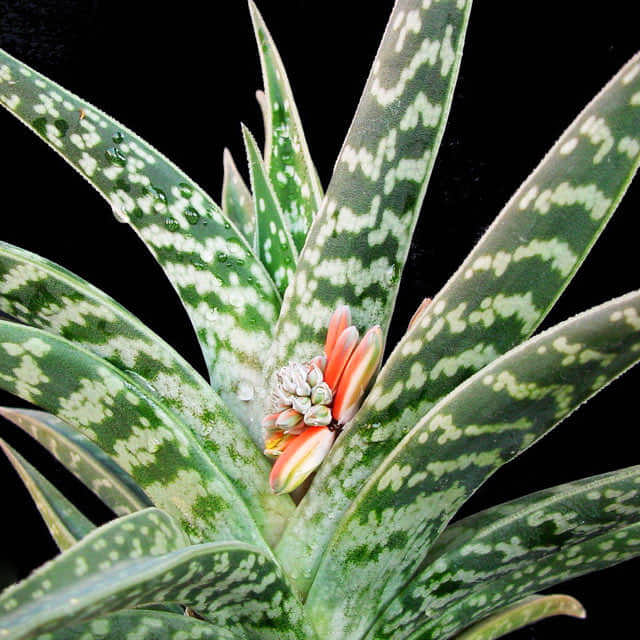
Why does your Aloe Variegata have drooping leaves? Diagnose the cause and fix it with our step-by-step guide.
Excessive moisture in the substrate leads to anaerobic conditions, causing the roots of the Aloe variegata to decay. Once roots rot, they can no longer transport water to the leaves, resulting in a paradoxical appearance of wilting despite wet soil.
As a succulent, Aloe variegata stores water in its leaves; when soil remains dry for too long, the plant consumes its internal reserves. This depletion causes the turgor pressure to drop, leading to limp, shriveled, or drooping foliage.
Aloe variegata is sensitive to frost and temperatures below 50°F (10°C). Exposure to cold causes cellular damage within the leaf tissue, which manifests as a loss of structural integrity and drooping.
A lack of essential macronutrients like nitrogen prevents the plant from maintaining cell wall strength and chlorophyll production. Over time, this weakness leads to a loss of upright posture in the leaves.
Your plant might also be experiencing one of these issues:

 English
 Italiano