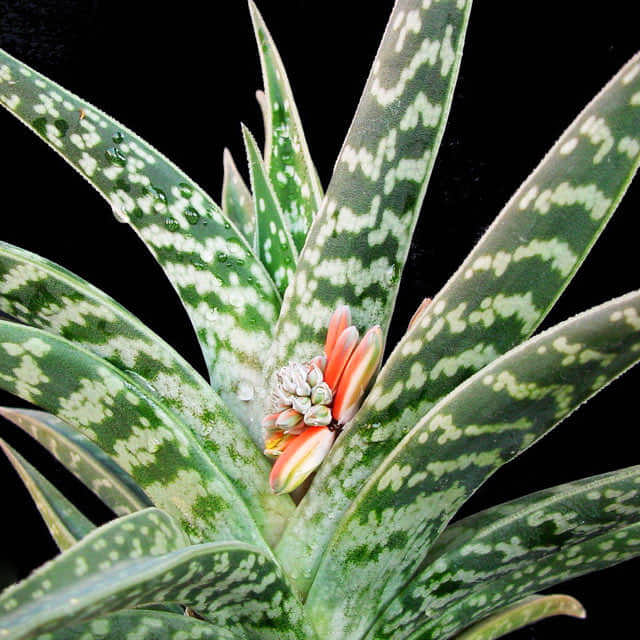
Aloe Variegata Yellow Leaves
eco Yellow Leaves

Aloe Variegata – Yellow Leaves

Why does your Aloe Variegata have yellow leaves? Diagnose the cause and fix it with our step-by-step guide.

search Possible Causes

error

Overwatering and Root Rot

Aloe vera variegata stores water in its leaves, making it highly susceptible to fungal pathogens like Phytophthora when soil stays saturated. Excessive moisture causes the roots to decay, preventing nutrient transport and resulting in yellowing foliage.

Very Common
lightbulb
How to confirm: Gently pull a leaf to see if it detaches with mushy, dark brown bases, and check if the substrate is damp deep below the surface.
build How to fix it
shopping_cart Recommended Products
1 Immediately remove the plant from its current pot and trim away any mushy, black, or foul-smelling decayed roots using sterilized tools.
2 Repot the Aloe in a well-draining, gritty substrate like a mix containing perlite or pumice to ensure moisture does not sit around the roots.
3 Use a soil moisture meter to monitor the substrate, ensuring you only water when the soil is completely dry to the touch.
warning

Nutrient Deficiency (Nitrogen or Magnesium)

A lack of essential macronutrients can cause chlorosis, where the chlorophyll production fails. In variegated species, the white bands may stay white while the green sections turn a pale yellow.

Common
lightbulb
How to confirm: Observe if the yellowing starts on older, bottom leaves first and check if you have used a balanced succulent fertilizer recently.
build How to fix it
shopping_cart Recommended Products
1 Apply a balanced liquid fertilizer to replenish essential nitrogen and magnesium levels in the soil.
2 Check the soil moisture levels with a meter to ensure the yellowing isn't actually caused by overwatering, which can mimic nutrient deficiency symptoms.
3 Repot the Aloe in a fresh, well-draining potting mix enriched with organic matter to provide long-term nutrient availability.
warning

Insufficient Light Exposure

While they tolerate some shade, a lack of bright, indirect light prevents the plant from maintaining its photosynthetic capacity. This leads to a loss of pigment and a pale, yellow appearance in the green sections of the leaves.

Common
lightbulb
How to confirm: Check if the plant has been moved to a darker corner or if the days are significantly shorter than usual.
build How to fix it
shopping_cart Recommended Products
1 Move your Aloe Variegata to a location that receives bright, indirect sunlight to restore its natural pigment and photosynthetic capacity.
2 Supplement with a full-spectrum grow light if natural light is insufficient, ensuring the light mimics a natural solar spectrum.
3 Monitor the plant's recovery using a light meter or by observing if the green sections of the leaves begin to darken.
warning

Temperature Stress (Cold Shock)

Aloe vera variegata is a succulent that thrives in warmth; exposure to temperatures below 50°F (10°C) can cause cellular damage. This physiological stress often manifests as yellowing or translucent patches on the leaves.

Common
lightbulb
How to confirm: Determine if the plant was recently exposed to a cold draft from a window or a sudden drop in night-time temperature.
build How to fix it
shopping_cart Recommended Products
1 Immediately move the plant to a warmer environment, ensuring temperatures remain consistently above 50°F (10°C) to prevent further cellular damage.
2 Monitor soil moisture closely using a moisture meter to ensure the cold shock hasn't led to overwatering, as cold, damp soil can cause root rot.
3 Apply a diluted liquid seaweed fertilizer to help the plant recover from physiological stress and boost nutrient uptake.

Other Aloe Variegata problems

Your plant might also be experiencing one of these issues:

local_hospital All symptoms eco All plants with yellow leaves
favorite