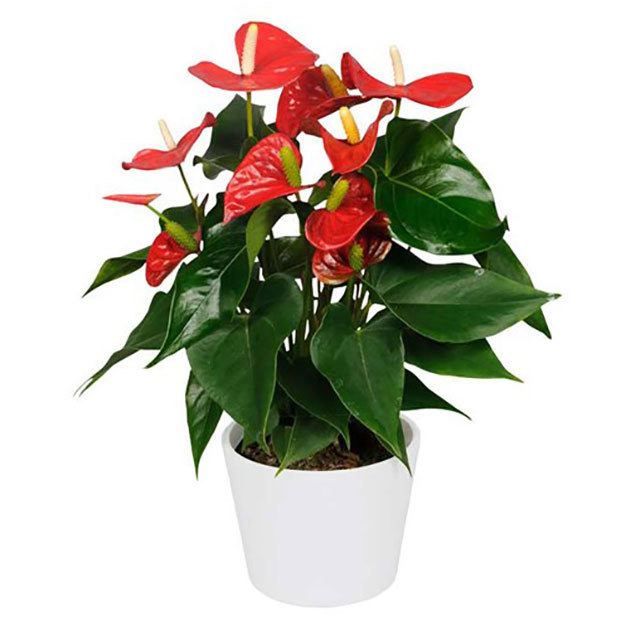
Anthurium andraeanum Aristo Drooping Leaves
eco Drooping Leaves

Anthurium andraeanum Aristo – Drooping Leaves

Why does your Anthurium andraeanum Aristo have drooping leaves? Diagnose the cause and fix it with our step-by-step guide.

search Possible Causes

error

Underwatering and Low Humidity

Anthuriums are tropical plants that require consistent moisture; when the medium dries out too much, the turgor pressure in the leaves drops, causing wilting. Additionally, low humidity can cause transpiration to exceed water uptake.

Very Common
lightbulb
How to confirm: Check if the potting medium is dry several inches below the surface and feel if the air feels exceptionally dry.
build How to fix it
shopping_cart Recommended Products
1 Check the soil moisture level immediately using a moisture meter to determine if the root zone is completely dry.
2 Thoroughly water the plant until water drains from the bottom, ensuring the medium is fully saturated to restore turgor pressure.
3 Increase ambient humidity around the plant by using a pebble tray or a fine misting spray bottle to reduce transpiration stress.
error

Root Rot (Overwatering)

Excessive water saturates the orchid bark or coco coir, displacing oxygen and causing roots to decay. Damaged roots cannot transport water to the leaves, resulting in a paradox where the plant appears wilted despite wet soil.

Very Common
lightbulb
How to confirm: Gently lift the plant from its pot to check if the roots are brown, slimy, or emit a foul odor.
build How to fix it
shopping_cart Recommended Products
1 Immediately remove the plant from its current pot and trim away any mushy, black, or foul-smelling roots using sterilized shears.
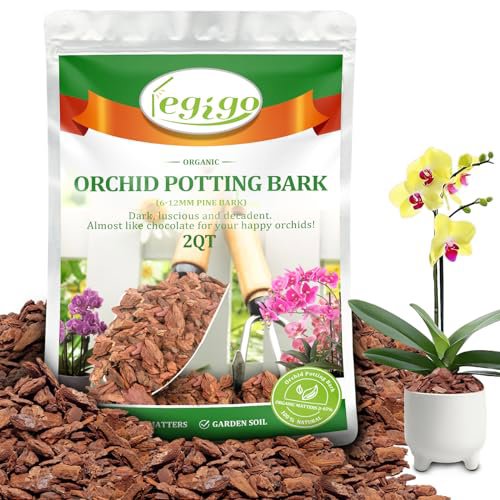
2 Repot the Anthurium in a fresh, highly aerated medium like a mix of orchid bark and perlite to ensure oxygen reaches the root zone.
3 Use a moisture meter to monitor the substrate, ensuring you only water when the top inch of soil is dry to prevent future saturation.
warning

Temperature Shock or Drafts

Anthurium andraeanum is highly sensitive to sudden temperature fluctuations and cold drafts from air conditioning. Cold stress disrupts metabolic processes and leads to rapid leaf loss or drooping.

Common
lightbulb
How to confirm: Observe if the plant is positioned near a window, vent, or door that experiences significant airflow changes.
build How to fix it
shopping_cart Recommended Products
1 Relocate your Anthurium to a stable environment away from air conditioning vents, drafty windows, or sudden temperature fluctuations.
2 Maintain a consistent room temperature between 65°F and 85°F to help the plant recover its metabolic functions.
3 Monitor the soil moisture closely during recovery to ensure the plant isn't also suffering from root stress, using a moisture meter for accuracy.
warning

Nutrient Deficiency (Nitrogen)

A lack of available nitrogen prevents the plant from maintaining structural integrity and chlorophyll production. While usually accompanied by yellowing, severe deficiency can manifest as limp, weak foliage.

Common
lightbulb
How to confirm: Check if older leaves are turning pale yellow in addition to the drooping symptom.
build How to fix it
shopping_cart Recommended Products
1 Apply a nitrogen-rich liquid fertilizer to boost chlorophyll production and leaf strength.
2 Check the soil moisture levels with a meter to ensure the drooping isn't actually caused by underwatering or overwatering.
3 Ensure the plant is in a well-draining potting medium to prevent root rot, which can also cause limp foliage.

Other Anthurium andraeanum Aristo problems

Your plant might also be experiencing one of these issues:

local_hospital All symptoms eco All plants with drooping leaves
favorite