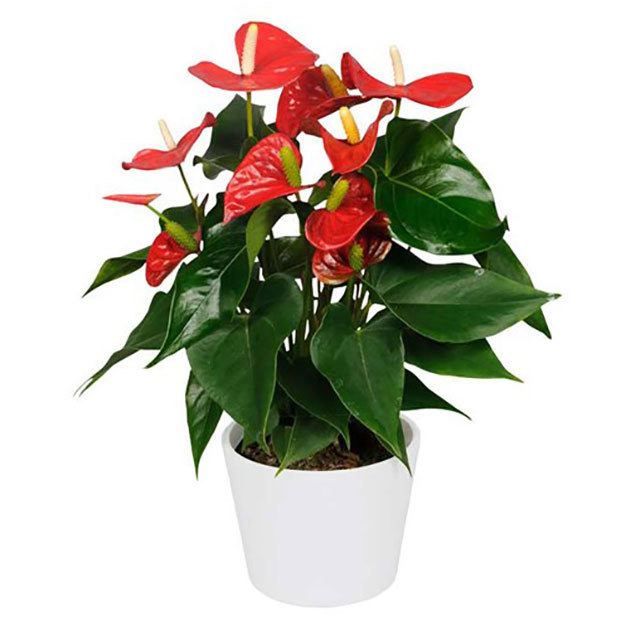
Anthurium andraeanum Aristo Yellow Leaves
eco Yellow Leaves

Anthurium andraeanum Aristo – Yellow Leaves

Why does your Anthurium andraeanum Aristo have yellow leaves? Diagnose the cause and fix it with our step-by-step guide.

search Possible Causes

error

Overwatering and Root Rot

Anthuriums are highly susceptible to waterlogging. Excess moisture in the substrate leads to anaerobic conditions, causing root decay which prevents the plant from transporting nutrients, resulting in chlorosis (yellowing).

Very Common
lightbulb
How to confirm: Gently lift the plant from its pot to check if the roots are brown and mushy rather than firm and white.
build How to fix it
shopping_cart Recommended Products
1 Immediately stop watering and allow the soil to dry out completely. Check the roots for any mushy, dark, or foul-smelling decay and prune away any dead sections using sterilized tools.
2 Repot the plant in a fresh, highly aerated substrate to prevent future waterlogging. A mix containing Legigo Organic Leca Clay Pebbles (ID: 755) or Perlite (ID: 732) will significantly improve drainage and oxygen flow to the roots.
3 To prevent future occurrences, use an analog moisture meter to monitor the soil. Only water when the meter indicates the top inch of soil is dry, ensuring you avoid the anaerobic conditions that cause rot.
error

Nutrient Deficiency (Nitrogen or Magnesium)

As a heavy feeder, an Aristo may develop yellowing leaves if nitrogen or magnesium levels in the potting medium are depleted. Nitrogen deficiency typically presents as uniform yellowing of older leaves first.

Very Common
lightbulb
How to confirm: Observe if the yellowing starts on older, lower leaves while new growth remains green.
build How to fix it
shopping_cart Recommended Products
1 Apply a balanced liquid fertilizer to replenish nitrogen and magnesium levels in the potting medium.
2 Supplement with a magnesium-specific fertilizer to address potential magnesium deficiency and strengthen cell walls.
3 Check the soil moisture levels using a moisture meter to ensure the deficiency isn't being masked by overwatering.
warning

Improper Lighting (Insufficient Light)

Anthuriums require bright, indirect light to maintain chlorophyll production. If the plant is in too much shade, it cannot photosynthesize efficiently, leading to pale or yellowing foliage.

Common
lightbulb
How to confirm: Check if the plant is located in a dark corner away from windows or behind heavy obstructions.
build How to fix it
shopping_cart Recommended Products
1 Move your Anthurium to a spot that receives bright, indirect sunlight, ensuring it is not in deep shade or direct scorching rays.
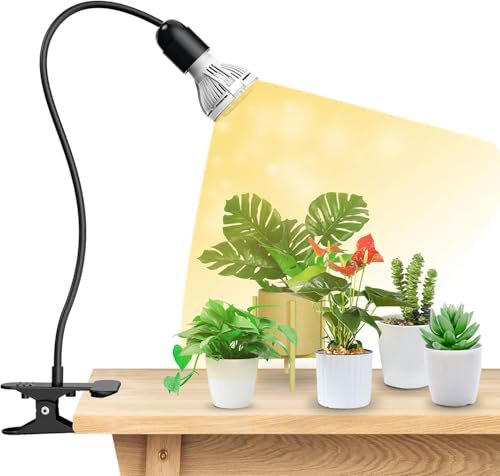
2 Supplement with a full-spectrum grow light to ensure consistent photosynthesis if natural light levels are too low.
3 Monitor the soil moisture levels closely, as insufficient light can slow down water evaporation and lead to secondary issues like root rot.
warning

Temperature Stress and Drafts

Aristo varieties are tropical and sensitive to cold fluctuations. Exposure to cold drafts from air conditioning or windows can shock the plant, causing sudden leaf yellowing and wilting.

Common
lightbulb
How to confirm: Check if the plant is positioned near an AC vent, a drafty window, or an unheated exterior wall.
build How to fix it
shopping_cart Recommended Products
1 Relocate your Anthurium to a stable, warm environment away from air conditioning vents, drafty windows, or sudden temperature fluctuations.
2 Monitor the soil moisture levels closely to ensure the plant is not also suffering from overwatering due to the stress, using a moisture meter for accuracy.
3 If the plant shows signs of recovery, provide a gentle boost with a liquid seaweed fertilizer to help it overcome environmental stress.

Other Anthurium andraeanum Aristo problems

Your plant might also be experiencing one of these issues:

local_hospital All symptoms eco All plants with yellow leaves
favorite