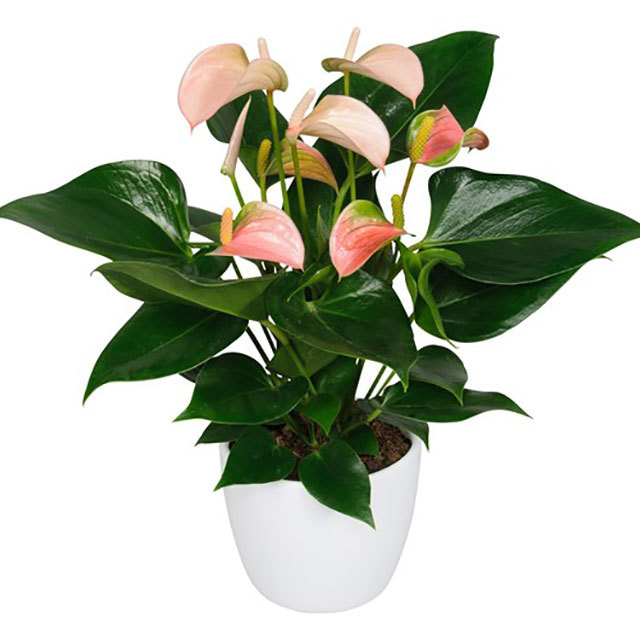
Anthurium andraeanum Joli Peach Sticky Leaves
eco Sticky Leaves

Anthurium andraeanum Joli Peach – Sticky Leaves

Why does your Anthurium andraeanum Joli Peach have sticky leaves? Diagnose the cause and fix it with our step-by-step guide.

search Possible Causes

error

Scale Insect Infestation

Scale insects attach themselves to the undersides of the Anthurium leaves and suck sap, excreting a sugary substance known as honeydew that creates a sticky residue. This is a common pest for tropical aroids like 'Joli Peach' in indoor environments.

Very Common
lightbulb
How to confirm: Inspect the underside of the leaves and stems for small, hard, brown or white bumps that do not move when prodded.
build How to fix it
shopping_cart Recommended Products
1 Treat the plant with an organic insecticide to eliminate the scale insects and stop the production of honeydew.
2 Wipe the leaves with a damp cloth to remove the sticky residue and any visible insect scales.
3 Inspect nearby plants to ensure the infestation has not spread, and use yellow sticky traps to monitor for any remaining flying pests.
error

Aphid Infestation

Aphids are soft-bodied insects that cluster on new growth and flower spathes of Anthuriums, secreting honeydew as they feed on plant fluids. This sticky residue often attracts secondary issues like sooty mold.

Very Common
lightbulb
How to confirm: Look for tiny, pear-shaped insects concentrated around the base of new leaves or the peduncle.
build How to fix it
shopping_cart Recommended Products
1 Apply an organic insecticide to eliminate the aphid population and stop the production of sticky honeydew.
2 Gently wipe the leaves with a damp cloth to remove the existing sticky residue and prevent the growth of sooty mold.
3 Monitor the plant's new growth regularly using yellow sticky traps to catch any remaining or newly arriving aphids.
warning

Mealybug Infestation

Mealybugs produce honeydew and are often accompanied by a white, cottony substance found in leaf axils. In 'Joli Peach', they tend to hide where the leaf meets the stem.

Common
lightbulb
How to confirm: Use a cotton swab dipped in rubbing alcohol to dab any white, fuzzy spots you find on the plant nodes.
build How to fix it
shopping_cart Recommended Products
1 Isolate the plant immediately to prevent the spread of mealybugs to other houseplants.
2 Treat the infestation by spraying the plant with an organic insecticide to eliminate adult bugs, larvae, and eggs.
3 Wipe the leaves and stems with a cotton swab dipped in isopropyl alcohol to remove the white cottony residue and sticky honeydew.
warning

Excessive Liquid Fertilizer Residue

Over-application of water-soluble fertilizers can lead to salt and mineral buildup that manifests as a sticky film on the leaf surface. This occurs when excess nutrients are not properly flushed through the substrate.

Common
lightbulb
How to confirm: Check if the stickiness is accompanied by white, crusty mineral deposits on the soil surface or pot edges.
build How to fix it
shopping_cart Recommended Products
1 Gently wipe the leaves with a damp, soft cloth to remove the sticky residue and prevent potential pest attraction.
2 Flush the soil thoroughly with plenty of fresh, room-temperature water to leach out accumulated mineral salts and excess fertilizer.
3 Monitor the soil moisture levels closely to ensure the flushing process does not lead to overwatering.

Other Anthurium andraeanum Joli Peach problems

Your plant might also be experiencing one of these issues:

local_hospital All symptoms eco All plants with sticky leaves
favorite