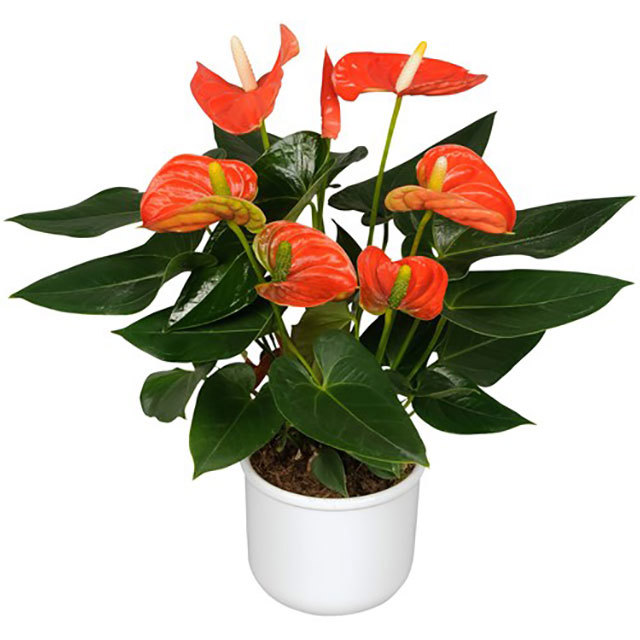
Why does your Anthurium andraeanum Sierra Orange have fine webbing? Diagnose the cause and fix it with our step-by-step guide.
Spider mites thrive in the warm, dry conditions often found with Anthuriums and create fine silk webbing to protect their colonies. They pierce plant cells to feed on sap, leading to stippling and chlorosis on the foliage.
While similar to the two-spotted mite, this specific strain is highly aggressive on Anthurium species and can cause rapid webbing development across the entire plant canopy. This often occurs when humidity levels drop below 50%.
In some cases, very fine, wispy white structures can be mistaken for webbing but are actually fungal mycelium or mold strands. This occurs in Anthuriums when there is insufficient air circulation around the dense foliage.
Your plant might also be experiencing one of these issues:

 English
 Italiano


