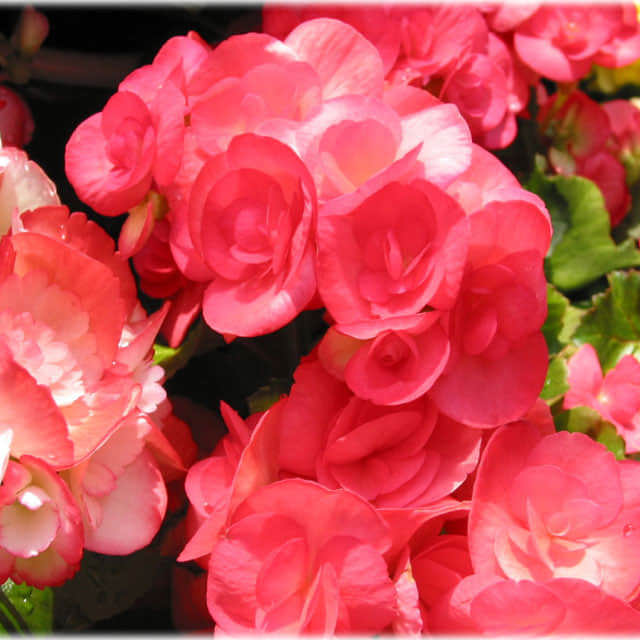
Why does your Begonia tuberhybrida have fine webbing? Diagnose the cause and fix it with our step-by-step guide.
Spider mites thrive in the warm, dry conditions often favored by Tuberous Begonias. They pierce plant cells to suck out sap, leaving behind fine silk webbing as they build colonies on the undersides of leaves.
In many greenhouse environments, this specific mite species creates dense webbing around new growth and leaf margins on Begonias. This often results in stippling (tiny yellow dots) on the foliage before the webbing becomes prominent.
While not a biological webbing, very dry microclimates can cause fine, hair-like fungal hyphae or dried mineral residue to appear like webbing on Begonia foliage. This is often accompanied by crispy, brown leaf edges.
Your plant might also be experiencing one of these issues:

 English
 Italiano