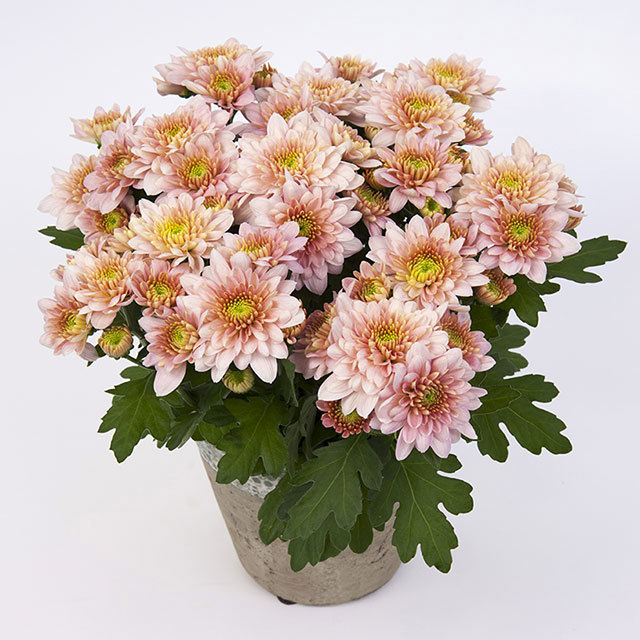
Why does your Chrysanthemum Castilho have fine webbing? Diagnose the cause and fix it with our step-by-step guide.
These tiny arachnids thrive in the warm, dry conditions often found with Chrysanthemums, feeding on the underside of leaves and leaving characteristic fine silken webs. As they multiply, the webbing becomes more dense, covering entire stems and flower heads.
While not a direct cause of webbing, the cellular ruptures from edema in Chrysanthemums can create rough leaf surfaces that trap dust and moisture, making existing mite webs appear more prominent. This occurs when the plant absorbs water faster than it can transpire through the stomata.
While less common than spider mites, certain piercing-sucking insects can leave behind light debris or silk-like secretions during feeding cycles on Chrysanthemums. This often accompanies stippling or necrotic spots on the foliage.
Your plant might also be experiencing one of these issues:

 English
 Italiano


