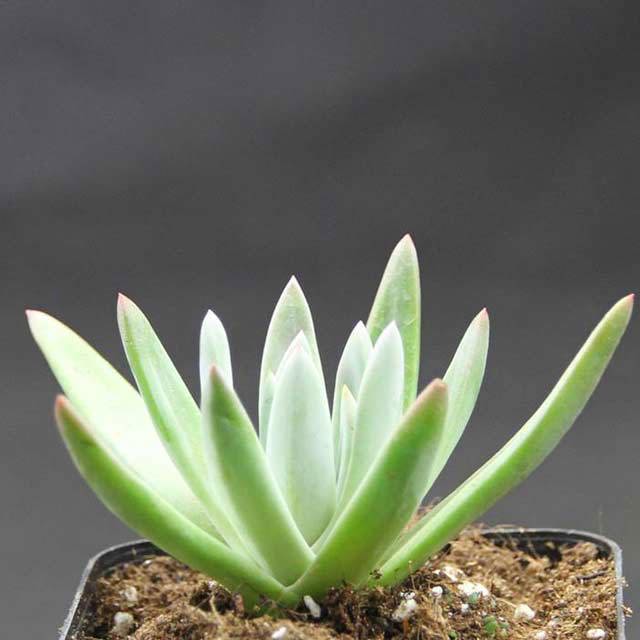
Dudleya farinosa Drooping Leaves
eco Drooping Leaves

Dudleya farinosa – Drooping Leaves

Why does your Dudleya farinosa have drooping leaves? Diagnose the cause and fix it with our step-by-step guide.

search Possible Causes

error

Root Rot (Phytophthora or Pythium)

Dudleya farinosa are succulents adapted to arid environments; excessive substrate moisture leads to fungal decay of the root system, causing the plant to lose its structural integrity and wilt.

Very Common
lightbulb
How to confirm: Gently tug on the base of the plant to see if it feels loose in the soil or if the roots appear black and slimy.
build How to fix it
shopping_cart Recommended Products
1 Immediately remove the plant from its current container and trim away any mushy, blackened, or foul-smelling roots caused by the rot.
2 Repot the Dudleya in a highly well-draining, gritty substrate to prevent future moisture retention; adding perlite or pumice is essential.
3 Ensure the new container has excellent drainage and use a moisture meter to monitor the soil, allowing it to dry out completely between waterings.
error

Extreme Dehydration

If the growing medium has dried out completely for an extended period, the turgor pressure within the fleshy leaves drops, causing the rosette to collapse inward.

Very Common
lightbulb
How to confirm: Check the weight of the pot and the moisture level deep in the substrate to see if it is bone dry.
build How to fix it
shopping_cart Recommended Products
1 Immediately check the soil moisture level using a probe to confirm the depth of dehydration.
2 Thoroughly soak the growing medium with water, ensuring the moisture reaches the root zone to restore turgor pressure.
3 If the soil is hydrophobic and water is not penetrating, gently aerate the medium with a tool to allow for better absorption.
warning

Temperature Stress (Heat Scorching)

While heat tolerant, extreme temperatures exceeding their native coastal range can cause physiological wilting and damage to the farina (the white powdery coating).

Common
lightbulb
How to confirm: Observe if the drooping is accompanied by darkened, translucent, or 'cooked' looking patches on the leaf edges.
build How to fix it
shopping_cart Recommended Products
1 Move the plant to a cooler, shaded location to protect the leaves from direct afternoon sun and prevent further heat scorching.
2 Monitor soil moisture levels closely to ensure the plant is not drying out too rapidly during heat waves, but avoid waterlogging the roots.
3 If the plant is in a pot, consider using a more insulating container or a saucer to help stabilize root temperatures.
warning

Nutrient Deficiency (Nitrogen/Potassium)

A lack of essential minerals can weaken the cell walls of the succulent, making it unable to support its own weight during growth cycles.

Common
lightbulb
How to confirm: Look for yellowing (chlorosis) on older leaves alongside the drooping symptom.
build How to fix it
shopping_cart Recommended Products
1 Apply a balanced, diluted liquid fertilizer to provide essential nitrogen and potassium to strengthen cell walls.
2 Check the soil moisture levels with a meter to ensure the drooping isn't actually caused by overwatering, which is common in Dudleya.
3 Ensure the plant is in a well-draining substrate, such as a mix containing perlite, to prevent root rot.

Other Dudleya farinosa problems

Your plant might also be experiencing one of these issues:

local_hospital All symptoms eco All plants with drooping leaves
favorite