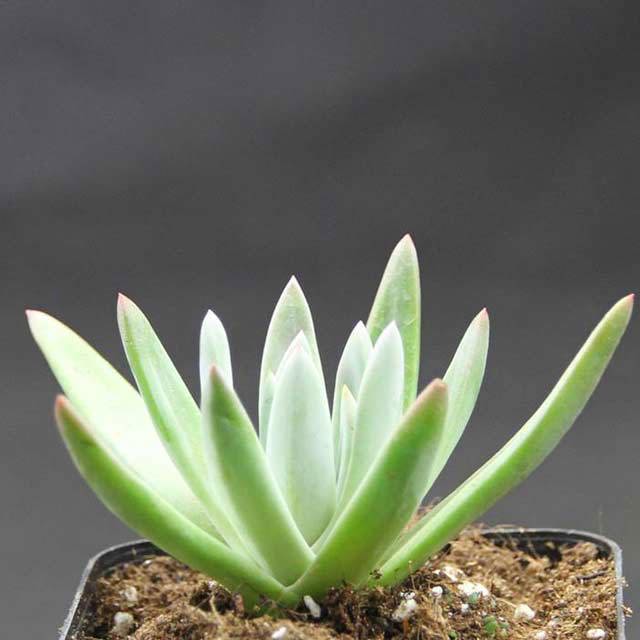
Dudleya farinosa White Cottony Spots
eco White Cottony Spots

Dudleya farinosa – White Cottony Spots

Why does your Dudleya farinosa have white cottony spots? Diagnose the cause and fix it with our step-by-step guide.

search Possible Causes

error

Mealybugs

Mealybugs are small, soft-bodied insects that secrete a white, waxy, cottony substance to protect themselves. On Dudleya farinosa, they typically cluster in the leaf axils and can cause the succulent leaves to shrivel or rot.

Very Common
lightbulb
How to confirm: Use a magnifying glass to look for tiny moving insects deep within the base of the leaf rosette.
build How to fix it
shopping_cart Recommended Products
1 Isolate the plant immediately to prevent the mealybugs from spreading to other succulents in your collection.
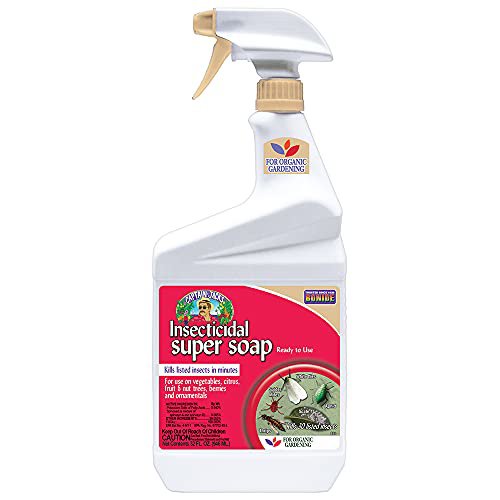
2 Treat the infestation by spraying the plant with an organic insecticide or neem oil to kill the insects and remove the waxy coating.
3 Use a cotton swab dipped in isopropyl alcohol to manually remove visible white cottony clusters from the leaf axils.
warning

Powdery Mildew

This fungal pathogen manifests as white, flour-like patches on the leaf surfaces. While Dudleya farinoza has a natural 'farinose' (mealy) coating, true powdery mildew looks more like unstructured dust that can be wiped off but eventually leads to leaf necrosis.

Common
lightbulb
How to confirm: Check if the white spots appear as fuzzy patches on top of the natural matte texture or if they are spreading rapidly across the leaves.
build How to fix it
shopping_cart Recommended Products
1 Apply an organic fungicide to the affected leaves to eliminate the fungal spores and prevent further spread.
2 Improve air circulation around the plant and ensure it is in a location with adequate sunlight to reduce humidity levels.
3 Prune and dispose of any heavily infected leaves to prevent the pathogen from colonizing healthy tissue.
warning

Natural Epicuticular Wax (Farina) buildup

Dudleya farinosa is named for its heavy coating of white, powdery wax. If the 'spots' appear more like thick, textured patches that are part of the leaf structure itself rather than an external growth, it is likely just the plant's natural protective layer.

Common
lightbulb
How to confirm: Gently touch a spot with a gloved finger; if the white substance rubs off and reveals green skin underneath without any sign of rot, it is natural farina.
build How to fix it
shopping_cart Recommended Products
1 Inspect the spots closely to determine if they are part of the leaf texture or external pests; if the spots are fuzzy and can be wiped away, treat for mealybugs.
2 Avoid touching or wiping the leaves, as removing the natural farina coating can leave the plant vulnerable to sunburn and dehydration.
3 Monitor the plant for any signs of actual pests like mealybugs or scale, which can mimic the appearance of white wax.

Other Dudleya farinosa problems

Your plant might also be experiencing one of these issues:

local_hospital All symptoms eco All plants with white cottony spots
favorite