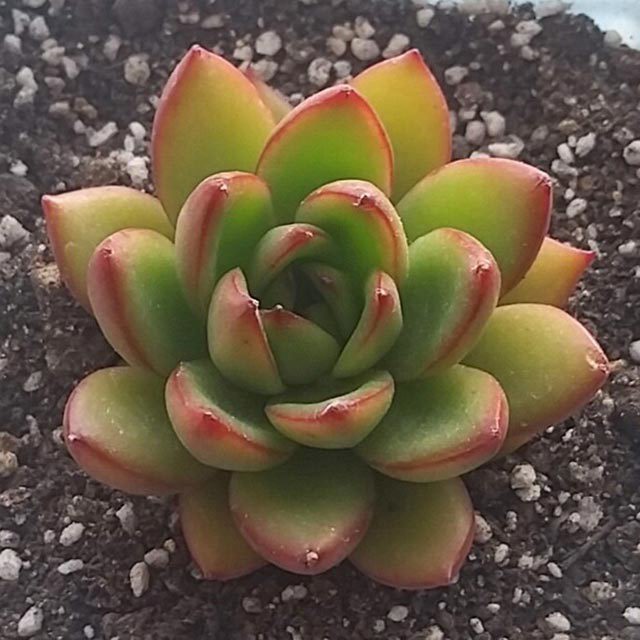
Echeveria agavoides Christmas Eve Sudden Leaf Drop
eco Sudden Leaf Drop

Echeveria agavoides Christmas Eve – Sudden Leaf Drop

Why does your Echeveria agavoides Christmas Eve have sudden leaf drop? Diagnose the cause and fix it with our step-by-step guide.

pets Pet Friendly

search Possible Causes

error

Overwatering and Root Rot

Excessive moisture in the substrate prevents oxygen from reaching the roots of this Echeveria, leading to fungal decay. As the root system fails, it can no longer support the foliage, causing leaves to detach easily at the base.

Very Common
lightbulb
How to confirm: Gently lift the plant from its pot to check if the roots are black, slimy, or have a foul odor.
build How to fix it
shopping_cart Recommended Products
1 Immediately remove the plant from its current container and discard the waterlogged soil to stop the decay process.
2 Inspect the roots for mushy, dark brown patches and prune away any rot using sterilized shears.
3 Repot the Echeveria in a well-draining, gritty substrate like a mix of perlite or clay pebbles to ensure proper aeration and prevent future rot.
error

Temperature Shock/Extreme Cold

Echeveria agavoides is sensitive to frost and sudden temperature drops. Exposure to temperatures near freezing can cause cellular collapse in the fleshy leaves, leading to rapid detachment.

Very Common
lightbulb
How to confirm: Check if the fallen leaves feel translucent or mushy and recall any recent exposure to cold drafts or nighttime temperature drops.
build How to fix it
shopping_cart Recommended Products
1 Immediately move the plant to a warm, draft-free indoor location to stabilize its temperature and prevent further cellular damage.
2 Check the soil moisture with a meter to ensure the cold hasn't caused water to pool or the soil to remain overly saturated, which leads to rot.
3 Prune away any mushy, blackened, or completely collapsed leaves to prevent fungal growth and allow the plant to focus energy on healthy tissue.
warning

Pest Infestation (Mealybugs)

Hidden colonies of mealybugs at the leaf axils (where the leaf meets the stem) suck the sap from the plant, weakening the connection. This stress can trigger a physiological response resulting in leaf drop.

Common
lightbulb
How to confirm: Inspect the base of the leaves and the crevices of the rosette for small, white, cottony clusters.
build How to fix it
shopping_cart Recommended Products
1 Inspect the leaf axils and crevices of your Echeveria for white, cottony clusters and treat the infestation immediately with an organic insecticide spray.
2 Gently wipe away visible mealybug colonies using a cotton swab dipped in isopropyl alcohol to prevent further sap loss and stress.
3 Isolate the plant from your other greenery to prevent the pests from spreading to healthy succulents.
warning

Nutrient Deficiency (Specifically Nitrogen)

A lack of essential macronutrients can weaken the structural integrity of the leaf attachment points. While slower than rot, a chronic deficiency in a growing medium can lead to premature leaf senescence.

Common
lightbulb
How to confirm: Observe if the remaining leaves are also showing pale or yellowish coloration rather than just dropping.
build How to fix it
shopping_cart Recommended Products
1 Apply a balanced, water-soluble fertilizer to provide immediate nitrogen uptake and restore leaf attachment strength.
2 Check the soil moisture levels using a moisture meter to ensure the leaf drop isn't actually caused by overwatering or root stress.
3 Amend the existing potting medium with a nitrogen-rich organic fertilizer to provide long-term nutrient availability.

Other Echeveria agavoides Christmas Eve problems

Your plant might also be experiencing one of these issues:

local_hospital All symptoms eco All plants with sudden leaf drop
favorite