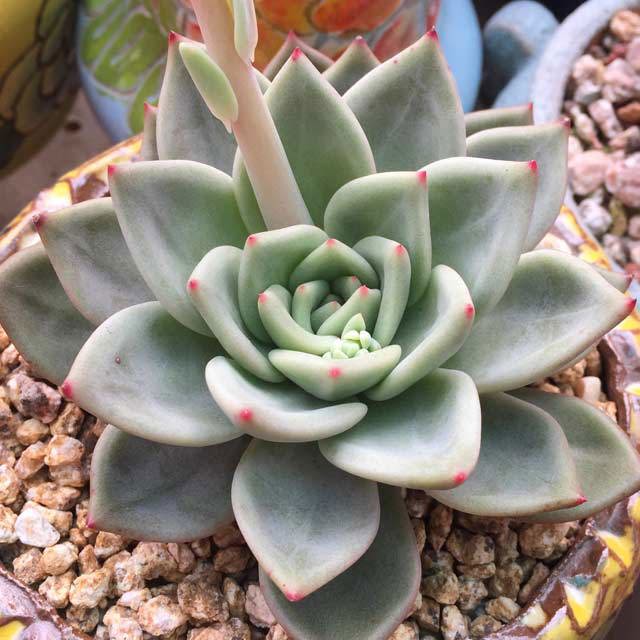
Echeveria Baekya Fine Webbing
eco Fine Webbing

Echeveria Baekya – Fine Webbing

Why does your Echeveria Baekya have fine webbing? Diagnose the cause and fix it with our step-by-step guide.

search Possible Causes

error

Two-Spotted Spider Mites (Tetranychus urticae)

These microscopic arachnids pierce the succulent leaves of Echeveria Baekya to suck out cell contents, leaving behind fine silken webs as they move across the plant. In low humidity environments typical for many indoor succulents, their populations can explode rapidly.

Very Common
lightbulb
How to confirm: Gently tap a leaf over a white piece of paper to see if tiny crawling dots fall out.
build How to fix it
shopping_cart Recommended Products
1 Isolate the plant immediately and spray the foliage thoroughly with an organic insecticide to kill existing mites and larvae.
2 Wipe the leaves with a damp cloth to physically remove webbing and debris, then increase local humidity to discourage future mite outbreaks.
3 Monitor the soil moisture levels to ensure the plant is not under drought stress, which can make succulents more susceptible to pests.
warning

Cheyletiid Mites (Clawing Mites)

These larger mites create more noticeable webbing and can cause the fleshy leaves of Echeveria to appear dull or discolored. They often thrive in slightly warmer, more humid microclimates within a collection.

Common
lightbulb
How to confirm: Inspect the undersides of the leaves and the base of the rosette for larger, moving reddish-brown mites.
build How to fix it
shopping_cart Recommended Products
1 Apply an organic insecticide spray to eliminate the mites and destroy any remaining eggs or larvae on the plant surface.
2 Carefully wipe the leaves with a damp cloth to physically remove visible webbing and mite clusters.
3 Isolate the Echeveria from other plants to prevent the mites from spreading through your collection.
warning

High Humidity/Mold growth

While less common as 'webbing,' extremely high localized humidity can cause fungal mycelium to appear as fine, white threading on the surface of the leaves. This is often accompanied by a musty smell or soft spots on the rosette.

Common
lightbulb
How to confirm: Check if the white strands are structurally connected to the leaf tissue like mold rather than loose like silk.
build How to fix it
shopping_cart Recommended Products
1 Increase airflow around the rosette and reduce humidity to prevent fungal mycelium from spreading.
2 Apply an organic fungicide to treat the white threading and protect healthy plant tissues.
3 Ensure the plant is in a well-draining medium to prevent moisture retention at the base of the leaves.

Other Echeveria Baekya problems

Your plant might also be experiencing one of these issues:

local_hospital All symptoms eco All plants with fine webbing
favorite