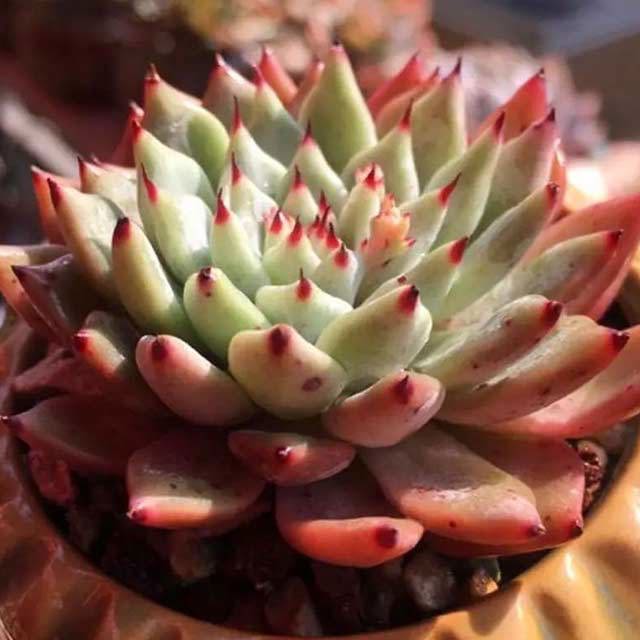
Echeveria cuspidata zaragozae Sudden Leaf Drop
eco Sudden Leaf Drop

Echeveria cuspidata zaragozae – Sudden Leaf Drop

Why does your Echeveria cuspidata zaragozae have sudden leaf drop? Diagnose the cause and fix it with our step-by-step guide.

search Possible Causes

error

Overwatering and Root Rot

Excessive moisture in the substrate causes the roots of Zaragoza Echeveria to suffocate and decay, losing their ability to anchor the plant. This leads to the leaves detaching easily from the stem as the internal structure fails.

Very Common
lightbulb
How to confirm: Gently tug on a leaf to see if it pulls away with zero resistance and check if the base of the stem feels soft or mushy.
build How to fix it
shopping_cart Recommended Products
1 Immediately remove the plant from its current pot and trim away any mushy, black, or foul-smelling roots using sterilized shears.
2 Repot the Echeveria in a well-draining, gritty substrate like a mix of organic perlite and cactus soil to ensure oxygen reaches the roots.
3 Use a moisture meter to monitor the substrate, ensuring you only water when the soil is completely dry to prevent future rot.
warning

Temperature Shock or Cold Stress

Echeveria cuspidata zaragozae is a succulent that prefers stable, warm temperatures. Sudden drops in temperature, especially near freezing, can cause cellular collapse in the leaves, resulting in rapid shedding.

Common
lightbulb
How to confirm: Check if there has been a recent significant drop in nighttime temperature or exposure to a cold draft.
build How to fix it
shopping_cart Recommended Products
1 Immediately move the plant to a warmer, stable environment away from cold drafts or windows to prevent further cellular damage.
2 Monitor the soil moisture closely using a moisture meter to ensure the plant is not being overwatered while in a stressed, non-growing state.
3 If the plant shows signs of recovery, provide supplemental warmth and light using a grow light to stabilize its metabolic processes.
warning

Pest Infestation (Mealybugs)

Soft-bodied insects like mealybugs feed on the sap of the Echeveria, weakening the plant's connection to its leaves. As the infestation progresses, the plant may shed leaves as a stress response to nutrient loss.

Common
lightbulb
How to confirm: Inspect the leaf axils and the underside of leaves for small, white, cottony clusters.
build How to fix it
shopping_cart Recommended Products
1 Isolate the plant immediately and treat the infestation with an organic insecticide to kill mealybugs and their eggs.
2 Carefully inspect the leaf axils and crevices for white, cottony residue and wipe them away with a cotton swab dipped in alcohol.
3 Ensure the plant is in a well-draining medium to prevent secondary issues like rot, which can also cause leaf drop.
warning

Nutrient Deficiency

A lack of essential minerals like magnesium or nitrogen can lead to a breakdown in leaf tissue integrity. In extreme cases, the plant will shed older, lower leaves to redirect resources to the growing tip.

Common
lightbulb
How to confirm: Observe if the dropped leaves show yellowing (chlorosis) before they detach from the stem.
build How to fix it
shopping_cart Recommended Products
1 Apply a balanced liquid fertilizer to replenish essential minerals like nitrogen and magnesium.
2 Monitor soil moisture levels with a meter to ensure the leaf drop isn't actually caused by overwatering.
3 Check for any signs of pests like spider mites that might be causing tissue breakdown.

Other Echeveria cuspidata zaragozae problems

Your plant might also be experiencing one of these issues:

local_hospital All symptoms eco All plants with sudden leaf drop
favorite