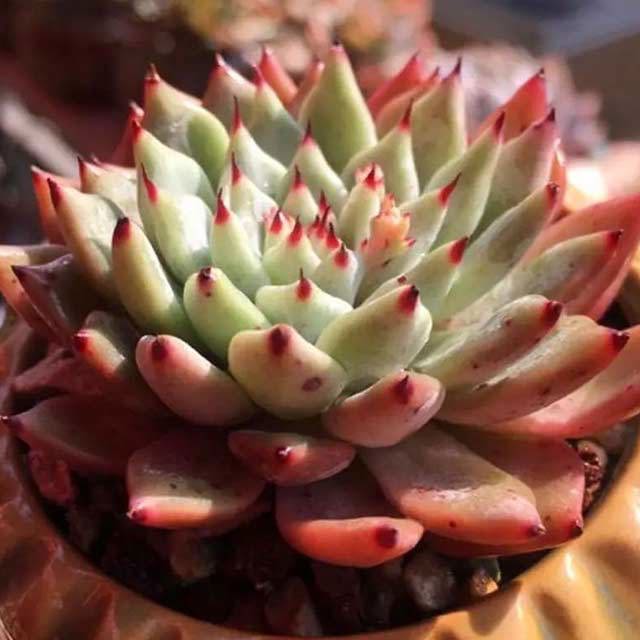
Echeveria cuspidata zaragozae White Powder
eco White Powder

Echeveria cuspidata zaragozae – White Powder

Why does your Echeveria cuspidata zaragozae have white powder? Diagnose the cause and fix it with our step-by-step guide.

search Possible Causes

error

Powdery Mildew

A fungal disease that manifests as a white, flour-like coating on the leaf surfaces, often appearing in high humidity or poor air circulation around the rosette.

Very Common
lightbulb
How to confirm: Scratch the white surface with your fingernail to see if it can be wiped off the leaf epidermis.
build How to fix it
shopping_cart Recommended Products
1 Apply an organic fungicide to the affected leaves to eliminate the fungal spores and prevent further spread.
2 Improve air circulation around the rosette and reduce humidity by avoiding overhead watering.
3 Prune and discard any heavily infected leaves to prevent the mildew from contaminating the rest of the plant.
error

Mealybugs

These small, soft-bodied insects secrete a white, waxy, cottony substance to protect themselves as they feed on the plant's sap.

Very Common
lightbulb
How to confirm: Inspect the tight crevices between the leaves and at the base of the rosette for tiny moving white specks.
build How to fix it
shopping_cart Recommended Products
1 Isolate the plant immediately to prevent the mealybugs from spreading to other houseplants.
2 Use a cotton swab dipped in isopropyl alcohol to manually remove the white, waxy clusters from the plant's crevices and leaves.
3 Apply an organic insecticide spray to the entire plant to eliminate any remaining insects and larvae.
warning

Mineral Deposits (Hard Water)

Calcium or magnesium buildup from tap water can leave a white, crusty residue on the leaf surface as water evaporates.

Common
lightbulb
How to confirm: Check if the white spots are hard and localized to where water droplets previously sat on the leaves.
build How to fix it
shopping_cart Recommended Products
1 Gently wipe the leaves with a soft, damp cloth or a cotton swab dipped in distilled water to remove the mineral crust without damaging the plant's farina coating.
2 Switch to using distilled water, rainwater, or filtered water for future watering to prevent new calcium and magnesium deposits from forming.
3 Monitor soil moisture levels to ensure you are not overwatering, which can exacerbate mineral buildup in the substrate.
warning

Edema (Cellular Rupture)

Rapid changes in moisture levels cause cells to swell and burst, which can leave behind white, corky, or scarred patches on the succulent leaves.

Common
lightbulb
How to confirm: Look for raised, bumpy, or calloused texture on the areas that previously appeared translucent or swollen.
build How to fix it
shopping_cart Recommended Products
1 Ensure consistent watering by checking soil moisture before each application to prevent the rapid swelling and bursting of cells.
2 Improve airflow around the plant and avoid overwatering to reduce the frequency of moisture fluctuations.
3 If the white patches are actually fungal in nature, treat the plant with an organic fungicide to prevent spread.

Other Echeveria cuspidata zaragozae problems

Your plant might also be experiencing one of these issues:

local_hospital All symptoms eco All plants with white powder
favorite