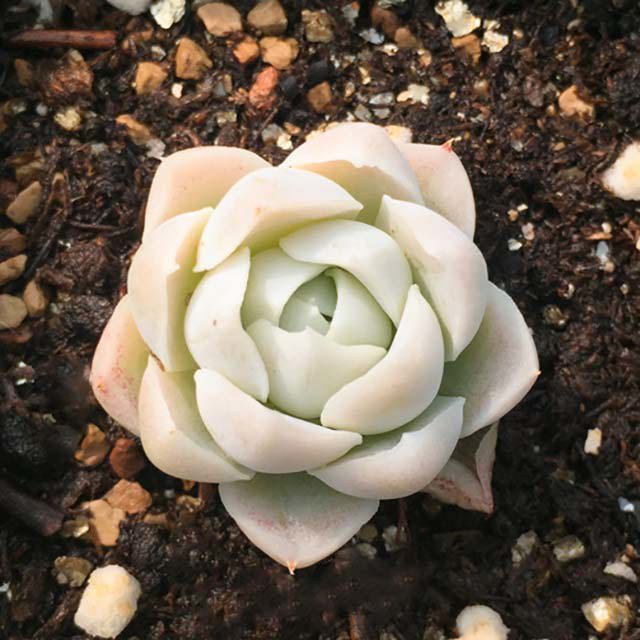
Echeveria elegans Alba Drooping Leaves
eco Drooping Leaves

Echeveria elegans Alba – Drooping Leaves

Why does your Echeveria elegans Alba have drooping leaves? Diagnose the cause and fix it with our step-by-step guide.

pets Pet Friendly

search Possible Causes

error

Overwatering and Root Rot

Excessive moisture in the substrate leads to anaerobic conditions, causing the roots of Echeveria elegans to decay. Once roots are compromised, they cannot transport water to the leaves, resulting in a limp, drooping appearance despite wet soil.

Very Common
lightbulb
How to confirm: Gently tug on a leaf; if it pulls away with zero resistance and the base is mushy, root rot is likely.
build How to fix it
shopping_cart Recommended Products
1 Immediately remove the plant from the pot and trim away any mushy, black, or foul-smelling decayed roots using sterilized tools.
2 Repot the Echeveria in a fresh, well-draining substrate specifically designed for succulents, such as a mix containing perlite or pumice to prevent future water retention.
3 Use a moisture meter to monitor the soil and ensure you only water when the substrate is completely dry to avoid repeating the overwatering cycle.
error

Dehydration (Underwatering)

Echeverias are succulents that store water in their leaves; prolonged drought causes the plant to use its internal reservoirs. As the turgor pressure decreases, the rosette loses its structural integrity and begins to wilt.

Very Common
lightbulb
How to confirm: Check if the soil is bone-dry several inches deep and if the leaves feel thin and wrinkled.
build How to fix it
shopping_cart Recommended Products
1 Check the soil moisture level immediately using a moisture meter to confirm the depth of dehydration.
2 Thoroughly soak the soil with water until it drains from the bottom of the pot to restore turgor pressure to the leaves.
3 Ensure the plant is in a well-draining medium, such as a mix containing perlite, to prevent future water retention issues.
warning

Temperature Stress (Cold Damage)

Echeveria elegans is sensitive to frost and extreme cold. Low temperatures can damage cell membranes in the leaf tissue, causing them to lose water retention capabilities and droop.

Common
lightbulb
How to confirm: Check for any dark, translucent, or blackened spots on the leaf edges that accompanied the drooping.
build How to fix it
shopping_cart Recommended Products
1 Immediately move the plant to a warmer, frost-free environment to prevent further cell damage and stabilize the temperature.
2 Monitor the soil moisture closely using a moisture meter to ensure the plant is not being overwatered while in a stressed, non-recovering state.
3 Apply a diluted dose of seaweed fertilizer to help the plant recover from environmental stress and boost nutrient uptake.
warning

Pest Infestation (Mealybugs)

Sap-sucking insects like mealybugs feed on the moisture and nutrients within the succulent leaves. Heavy infestations can weaken the plant's internal pressure, causing individual leaves to lose firmness.

Common
lightbulb
How to confirm: Inspect the tight crevices between the leaves for small, white, cottony clusters.
build How to fix it
shopping_cart Recommended Products
1 Isolate the plant immediately and treat the infestation with an organic insecticide to kill existing mealybugs and larvae.
2 Carefully wipe away visible white cottony insects from leaf crevices using a cotton swab dipped in isopropyl alcohol.
3 Check the soil moisture with a meter to ensure the drooping isn't also caused by overwatering, which often accompanies pest-related stress.

Other Echeveria elegans Alba problems

Your plant might also be experiencing one of these issues:

local_hospital All symptoms eco All plants with drooping leaves
favorite