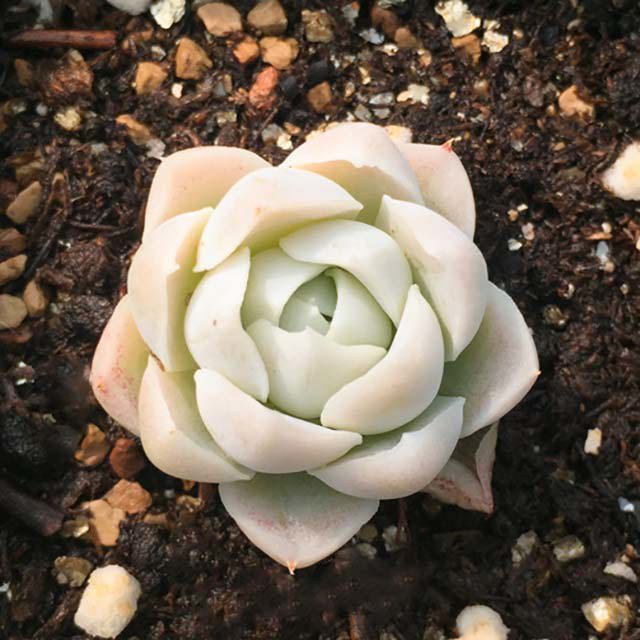
Echeveria elegans Alba Yellow Leaves
eco Yellow Leaves

Echeveria elegans Alba – Yellow Leaves

Why does your Echeveria elegans Alba have yellow leaves? Diagnose the cause and fix it with our step-by-step guide.

pets Pet Friendly

search Possible Causes

error

Overwatering and Root Rot

Echeveria elegans are succulents that store water in their leaves; excessive moisture causes the roots to suffocate and decay, leading to chlorosis (yellowing) as the plant can no longer transport nutrients.

Very Common
lightbulb
How to confirm: Gently squeeze a yellow leaf to see if it feels mushy or translucent, and check if the soil remains damp for more than a week.
build How to fix it
shopping_cart Recommended Products
1 Immediately remove the plant from its current pot and inspect the roots; trim away any mushy, black, or foul-smelling roots using sterilized tools.
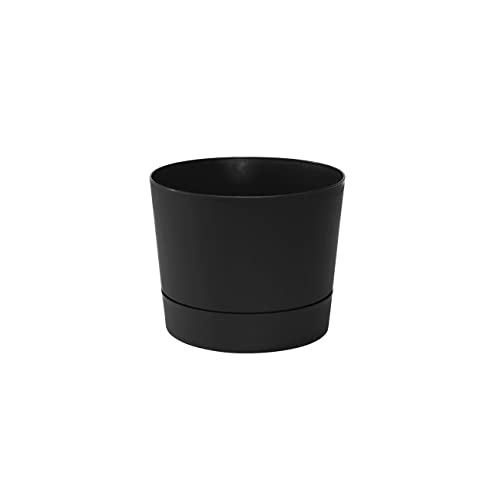
2 Repot the Echeveria in a well-draining succulent mix and use a container with excellent drainage, such as a Root & Vessel cylinder pot, to prevent future water pooling.
3 Amend your potting medium with horticultural perlite to increase aeration and prevent soil compaction, which helps avoid future root suffocation.
warning

Nutrient Deficiency (Nitrogen)

A lack of nitrogen in the growing medium prevents the production of chlorophyll, causing older leaves to turn pale yellow before eventually withering.

Common
lightbulb
How to confirm: Observe if the yellowing starts on the oldest, bottom leaves first while the new growth remains relatively firm.
build How to fix it
shopping_cart Recommended Products
1 Apply a nitrogen-rich organic fertilizer to the soil to restore chlorophyll production and green up the foliage.
2 Monitor the soil moisture levels using a moisture meter to ensure the nitrogen-rich fertilizer is being absorbed without causing root rot.
3 Inspect the older, yellowing leaves and prune any that have become completely mushy or withered to prevent rot from spreading.
warning

Insufficient Light (Etiolation)

If this cultivar is not receiving enough bright, direct light, it may struggle to maintain its pigment and energy levels, resulting in pale, yellowish-white leaves.

Common
lightbulb
How to confirm: Check if the rosette is stretching out or becoming 'leggy' rather than maintaining its tight, compact shape.
build How to fix it
shopping_cart Recommended Products
1 Move your Echeveria to a location that receives bright, direct sunlight for at least 6 hours a day to restore pigment and prevent further stretching.
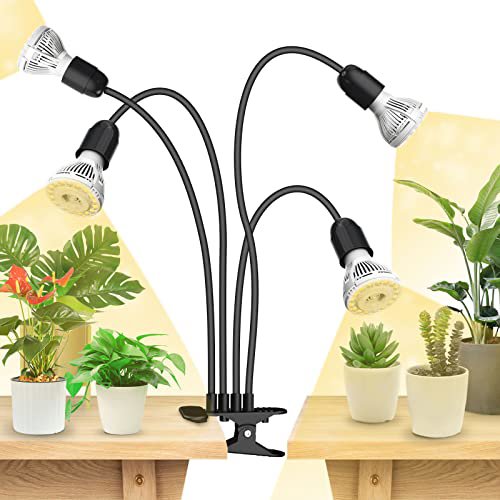
2 If natural light is insufficient, supplement with a full-spectrum LED grow light to provide the necessary energy for healthy leaf color.
3 Monitor the soil moisture levels closely, as insufficient light often leads to slower water evaporation and potential root issues.
warning

Temperature Stress (Cold Damage)

Echeveria elegans is sensitive to frost; sudden drops in temperature can damage cell walls, causing the leaves to lose their structural integrity and turn yellow or translucent.

Common
lightbulb
How to confirm: Check if there has been a recent period of temperatures near or below freezing in your plant's environment.
build How to fix it
shopping_cart Recommended Products
1 Immediately move the plant to a warmer, sheltered location away from cold drafts or frost to prevent further cell damage.
2 Monitor soil moisture closely using a moisture meter to ensure the plant is not being overwatered while in a stressed, low-metabolism state.
3 Once the plant stabilizes, apply a diluted liquid seaweed fertilizer to help boost nutrient uptake and promote recovery from environmental stress.

Other Echeveria elegans Alba problems

Your plant might also be experiencing one of these issues:

local_hospital All symptoms eco All plants with yellow leaves
favorite