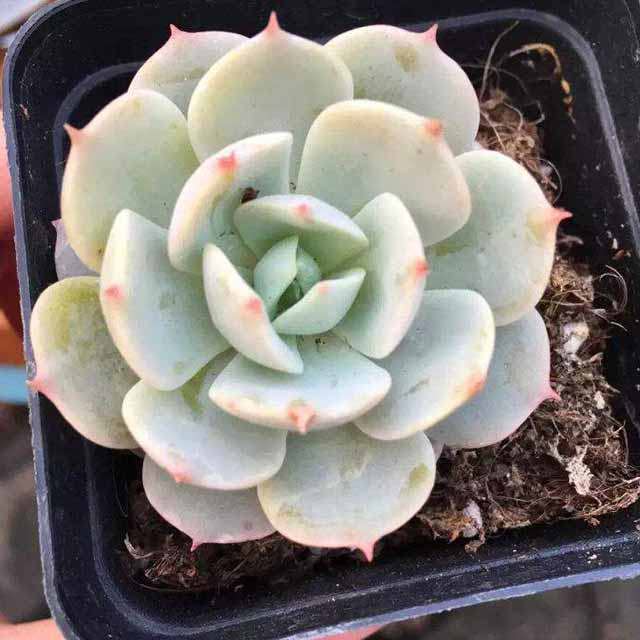
Echeveria Peacock Blue Sudden Leaf Drop
eco Sudden Leaf Drop

Echeveria Peacock Blue – Sudden Leaf Drop

Why does your Echeveria Peacock Blue have sudden leaf drop? Diagnose the cause and fix it with our step-by-step guide.

search Possible Causes

error

Overwatering and Root Rot

Excessive moisture causes the roots of Echeveria to suffocate and decay, preventing the plant from transporting water to the leaves. This leads to the rapid detachment of leaves that feel soft or translucent at the base.

Very Common
lightbulb
How to confirm: Gently tug a leaf; if it pops off easily and the base feels mushy or dark, root rot is likely.
build How to fix it
shopping_cart Recommended Products
1 Immediately remove the plant from its current container and discard any mushy, black, or foul-smelling roots.
2 Repot the Echeveria in a well-draining, gritty substrate to ensure oxygen reaches the roots and prevent future rot.
3 Use a moisture meter to monitor the soil and ensure you only water when the medium is completely dry to the touch.
error

Temperature Shock

Echeveria Peacock Blue are succulents that prefer stable, warm environments. A sudden drop in temperature, especially near freezing levels, can cause the plant's cells to rupture, resulting in rapid leaf shedding.

Very Common
lightbulb
How to confirm: Check if the plant was recently moved near a cold window draft or exposed to nighttime frost.
build How to fix it
shopping_cart Recommended Products
1 Immediately move the plant to a stable, warm indoor environment away from cold drafts or windows.
2 Monitor the soil moisture closely to ensure the plant is not overwatered while in recovery, as temperature stress can slow evaporation.
3 Avoid applying fertilizer until the plant shows new, healthy growth and has stabilized in its new environment.
warning

Pest Infestation (Mealybugs)

Small, white, cottony insects called mealybugs feed on the sap of the Echeveria, weakening the plant's structural integrity. Severe infestations can cause leaves to lose their attachment to the stem.

Common
lightbulb
How to confirm: Inspect the leaf axils and the base of the rosette for tiny white, waxy clusters.
build How to fix it
shopping_cart Recommended Products
1 Inspect the plant closely for white, cottony clusters, especially in the leaf axils, and treat the infestation immediately with an organic insecticide spray.
2 Carefully remove any heavily infested or rotting leaves to prevent the spread of pests and promote new growth.
3 Isolate the Echeveria from other houseplants to prevent mealybugs from migrating to healthy plants.
warning

Nutrient Deficiency or Soil Depletion

If the potting medium is old and depleted of minerals, the plant may shed older leaves to conserve energy for the growing meristem. This is usually a slower process than rot but can manifest as sudden drop if the soil has become hydrophobic.

Common
lightbulb
How to confirm: Check if the soil has pulled away from the sides of the pot and feels bone-dry and hard.
build How to fix it
shopping_cart Recommended Products
1 Check the soil moisture levels using a moisture meter to ensure the medium hasn't become hydrophobic and is actually absorbing water.
2 Repot the Echeveria in fresh, well-draining soil amended with perlite to restore aeration and nutrient availability.
3 Apply a diluted organic liquid fertilizer to replenish essential minerals like nitrogen and potassium.

Other Echeveria Peacock Blue problems

Your plant might also be experiencing one of these issues:

local_hospital All symptoms eco All plants with sudden leaf drop
favorite