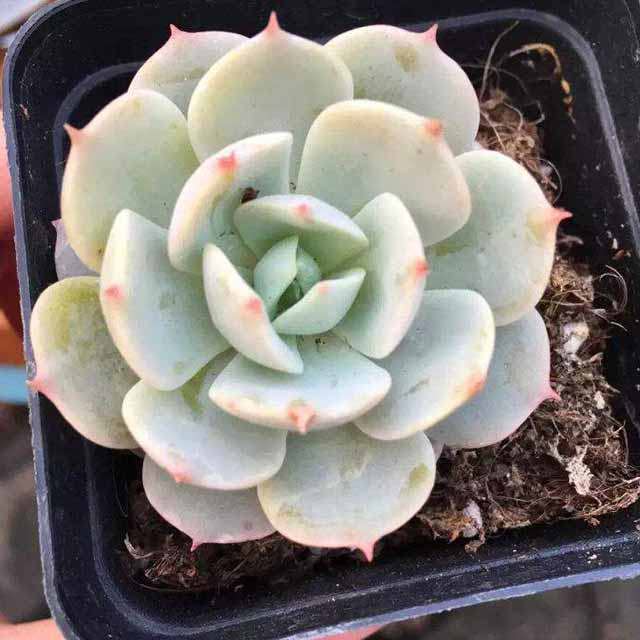
Why does your Echeveria Peacock Blue have yellow leaves? Diagnose the cause and fix it with our step-by-step guide.
Excessive moisture in the substrate prevents oxygen from reaching the roots of this succulent, leading to cell breakdown and yellowing, typically starting with the lower leaves. This is the most common cause for Echeveria as they are highly susceptible to fungal pathogens like Phytophthora when soil stays damp.
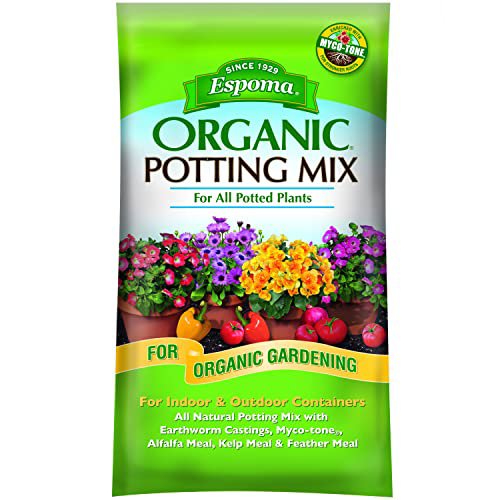
A lack of nitrogen in the growing medium can cause older leaves to turn pale yellow as the plant mobilizes nutrients to newer growth. This often occurs if the soil has been depleted over several growing seasons without fertilization.
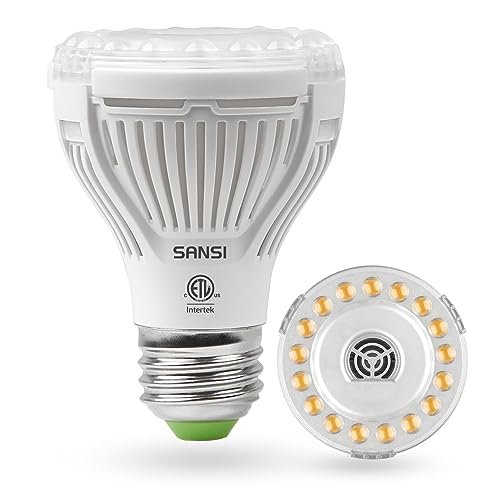
While Echeveria Peacock Blue needs bright light, prolonged periods in low light can lead to chlorosis (yellowing) and etiolation (stretching). The plant loses its ability to maintain chlorophyll levels when photosynthesis is limited.
Extreme drops in temperature can damage the cellular structure of the succulent, causing the leaves to turn yellow and eventually translucent. Echeverias are not frost-hardy and require consistent warmth.
Your plant might also be experiencing one of these issues:

 English
 Italiano