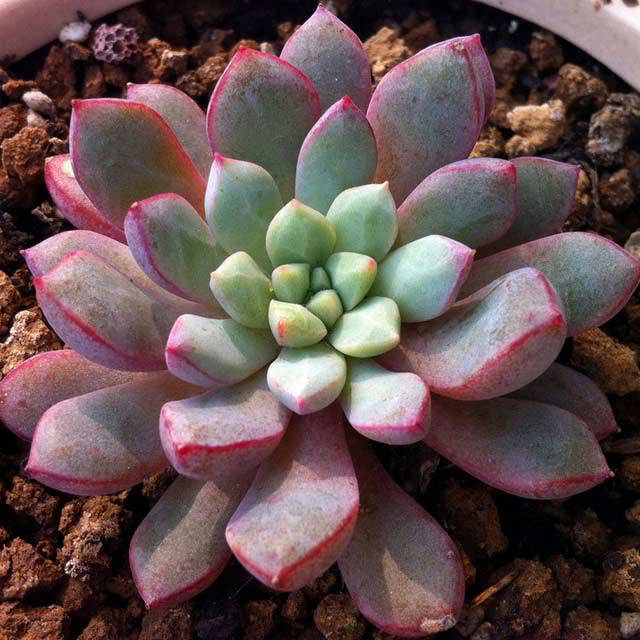
Echeveria subcorymbosa Fine Webbing
eco Fine Webbing

Echeveria subcorymbosa – Fine Webbing

Why does your Echeveria subcorymbosa have fine webbing? Diagnose the cause and fix it with our step-by-step guide.

pets Pet Friendly

search Possible Causes

error

Two-Spotted Spider Mites (Tetranychus urticae)

These microscopic arachnids thrive in the warm, dry conditions favored by Echeveria. They pierce the succulent cells to suck out sap, leaving behind fine silk webs and causing the leaves to lose their characteristic blue-grey luster.

Very Common
lightbulb
How to confirm: Hold a white piece of paper under a leaf and tap the plant to see if tiny moving dots fall onto the paper.
build How to fix it
shopping_cart Recommended Products
1 Isolate the plant immediately and spray the foliage thoroughly with an organic miticide to kill existing mites and larvae.
2 Increase humidity and reduce heat around the plant, as spider mites thrive in dry, stagnant air.
3 Check the soil moisture levels to ensure the plant is not under drought stress, which can make it more susceptible to infestations.
warning

Tetranychus cynophila (European Red Spider Mite)

Often found on succulents in warmer climates, these mites create denser webbing that can eventually lead to bronzing or stippling of the Echeveria's fleshy leaves.

Common
lightbulb
How to confirm: Inspect the undersides of the thick, fleshy leaves for small reddish or orange moving specks.
build How to fix it
shopping_cart Recommended Products
1 Isolate the plant immediately to prevent the spider mites from spreading to other succulents in your collection.
2 Spray the plant thoroughly with an organic miticide or neem oil to eliminate the mites and their eggs.
3 Gently wipe the leaves with a damp cloth to physically remove the fine webbing and any remaining mites.
warning

Cheesemania/Mite infestation due to high humidity

While spider mites prefer dry air, extreme fluctuations in humidity can sometimes trigger mite outbreaks in Echeveria by stressing the plant's cuticle.

Common
lightbulb
How to confirm: Check if the webbing is concentrated specifically around the tight rosette center where moisture might trap.
build How to fix it
shopping_cart Recommended Products
1 Immediately spray the plant with an organic miticide to eliminate existing mites and their eggs.
2 Isolate the Echeveria from other plants to prevent the mites from spreading through the fine webbing.
3 Monitor soil moisture levels to ensure you aren't overwatering, as excess moisture can contribute to the stress causing these outbreaks.

Other Echeveria subcorymbosa problems

Your plant might also be experiencing one of these issues:

local_hospital All symptoms eco All plants with fine webbing
favorite