Echeveria subcorymbosa White Powder
eco White Powder

Echeveria subcorymbosa – White Powder

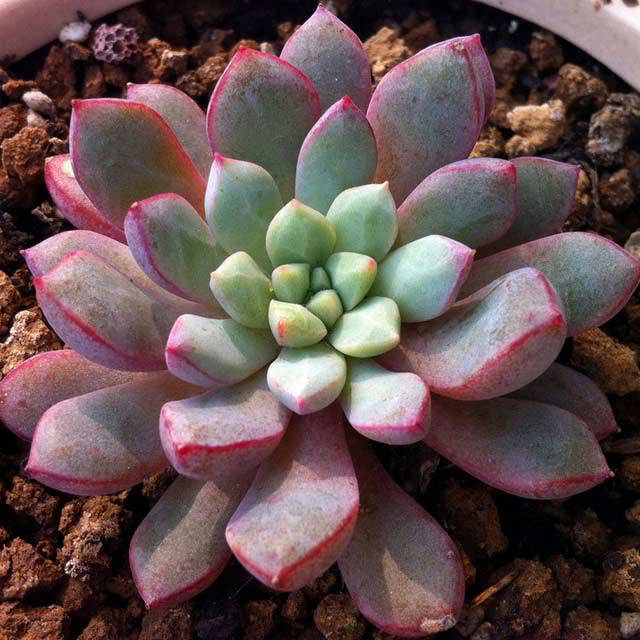
Why does your Echeveria subcorymbosa have white powder? Diagnose the cause and fix it with our step-by-step guide.

pets Pet Friendly

search Possible Causes

error

Powdery Mildew

This fungal disease manifests as a white, flour-like coating on the leaves and can spread rapidly in high humidity or poor airflow. In Echeveria, it often appears as patches that can eventually lead to leaf decay.

Very Common
lightbulb
How to confirm: Check if the white substance can be wiped off easily with your finger, leaving a thin residue behind.
build How to fix it
shopping_cart Recommended Products
1 Apply an organic fungicide to eliminate the fungal spores and prevent further spread across the leaves.
2 Improve air circulation around the plant and reduce humidity levels to create an environment less hospitable to mildew.
3 Prune and dispose of any heavily infected leaves to prevent the disease from reaching healthy tissue.
error

Mealybugs

These small insects secrete a white, cottony wax to protect themselves, which looks like powder or fluff nestled in the leaf axils. They suck the sap from the Echeveria, causing leaves to shrivel and discolor.

Very Common
lightbulb
How to confirm: Inspect the tight crevices where the leaves meet the stem for tiny, moving white insects or sticky residue.
build How to fix it
shopping_cart Recommended Products
1 Isolate the plant immediately to prevent the spread of mealybugs to other houseplants.
2 Treat the infestation by spraying the plant with an organic insecticide to eliminate the insects and their protective wax.
3 Use a cotton swab dipped in alcohol to manually remove visible white cottony clusters from the leaf axils.
warning

Mineral Deposits (Efflorescence)

Excessive salts and minerals from tap water or fertilizers can crystallize on the leaf surface as water evaporates. This is common in succulents if hard water is used frequently.

Common
lightbulb
How to confirm: Try wiping a leaf with distilled water; if the white residue disappears completely without leaving a mark, it is likely mineral buildup.
build How to fix it
shopping_cart Recommended Products
1 Gently wipe the leaves with a soft, damp cloth or a cotton swab dipped in distilled water to remove the mineral buildup without damaging the plant's farina.
2 Switch to using distilled, rainwater, or filtered water for future waterings to prevent new mineral deposits from forming on the succulent leaves.
3 Flush the soil thoroughly with distilled water to leach out excess salts and minerals from the root zone.
warning

Calcium Carbonate Precipitation

When Echeveria leaves are frequently misted with hard water, the drying process leaves behind white calcium spots. Unlike mildew, these spots are often more localized and do not spread to new growth.

Common
lightbulb
How to confirm: Observe if the white spots appear specifically on the edges or surfaces that were recently wet.
build How to fix it
shopping_cart Recommended Products
1 Gently wipe the leaves with a soft, damp cloth using distilled or filtered water to remove the calcium deposits without damaging the plant's farina coating.
2 Switch to using rainwater or distilled water for watering and avoid misting the foliage to prevent future mineral buildup.
3 Monitor the soil moisture levels to ensure you are not overwatering, which can exacerbate mineral accumulation in the substrate.

Other Echeveria subcorymbosa problems

Your plant might also be experiencing one of these issues:

local_hospital All symptoms eco All plants with white powder
favorite