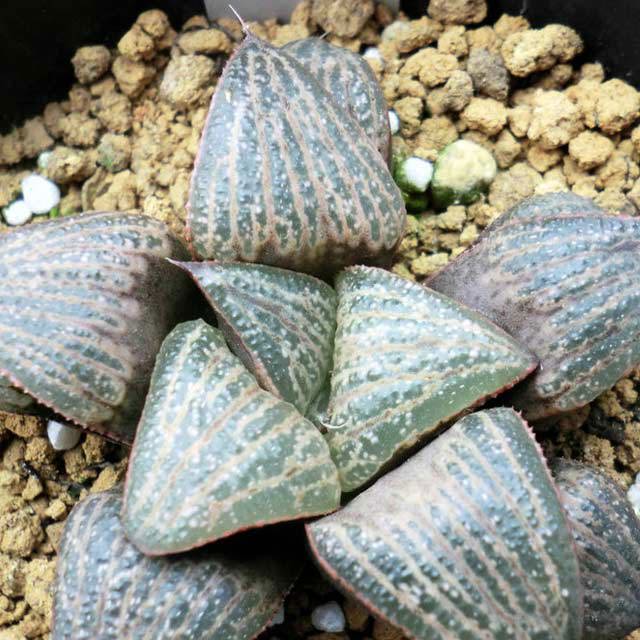
Haworthia magnifica splendens White Cottony Spots
eco White Cottony Spots

Haworthia magnifica splendens – White Cottony Spots

Why does your Haworthia magnifica splendens have white cottony spots? Diagnose the cause and fix it with our step-by-step guide.

search Possible Causes

error

Mealybug Infestation

Mealybugs are small, soft-bodied insects that secrete a white, waxy, cottony substance to protect themselves. On Haworthia magnifica splendens, they often hide in the crevices between leaves or near the base of the plant, sucking sap and weakening the succulent.

Very Common
lightbulb
How to confirm: Use a toothpick to probe the white spots; if the mass moves or breaks apart into tiny insects, it is mealybugs.
build How to fix it
shopping_cart Recommended Products
1 Immediately treat the plant with an organic insecticide to eliminate existing mealybug colonies and prevent further sap loss.
2 Carefully inspect the crevices of the Haworthia leaves and use a cotton swab dipped in isopropyl alcohol to manually remove visible white cottony clusters.
3 Isolate the infested plant from your other succulents to prevent the mealybugs from spreading via contact or air movement.
warning

Pseudococcus (Root Mealybugs)

While surface cottony spots are common, specialized root mealybugs can cause white exudates to appear near the base or stem of the Haworthia. These pests attack the root system, which can lead to the eventual shriveling of the succulent leaves.

Common
lightbulb
How to confirm: Gently lift the plant from its substrate to check for white, fuzzy clusters clinging to the roots.
build How to fix it
shopping_cart Recommended Products
1 Inspect the root system and base of the plant for hidden white clusters; if found, treat the infestation immediately with an organic insecticide spray.
2 Gently wash the roots and plant base to remove visible pests and debris, then repot in a fresh, well-draining substrate to eliminate any remaining larvae in the old soil.
3 Monitor soil moisture levels closely using a moisture meter to ensure the plant is not staying too damp, as excess moisture can encourage pest and fungal issues.
warning

Fungal Mycelium (Saprophytic Fungi)

If the environment is excessively humid or the plant has a wound, certain fungi may produce visible white, thread-like mycelium. This often appears as a fuzzy coating on decaying organic matter near the base of the Haworthia leaves.

Common
lightbulb
How to confirm: Check if the white spots are accompanied by soft, mushy, or translucent tissue on the leaf edges.
build How to fix it
shopping_cart Recommended Products
1 Carefully remove the white fuzzy material from the plant base using a clean tool and treat the affected area with a fungicide to stop fungal spread.
2 Improve air circulation around the plant and reduce humidity levels to prevent further fungal growth.
3 Check the soil moisture levels to ensure the plant is not sitting in overly damp substrate, which encourages saprophytic fungi.

Other Haworthia magnifica splendens problems

Your plant might also be experiencing one of these issues:

local_hospital All symptoms eco All plants with white cottony spots
favorite