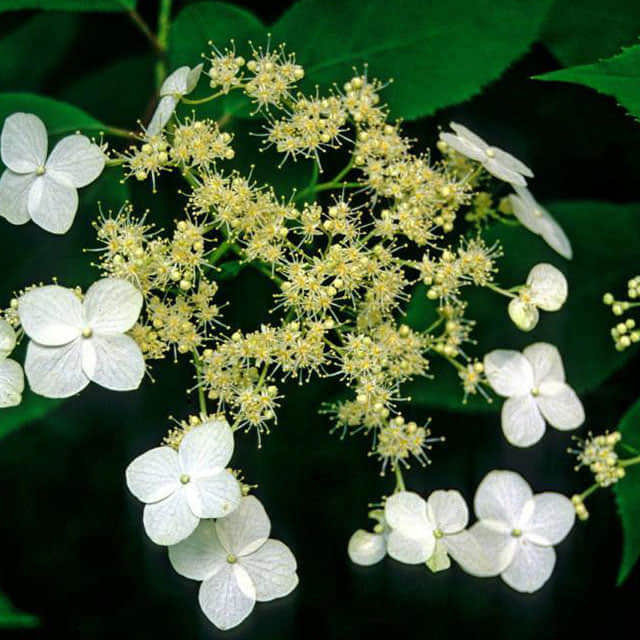
Why does your Hydrangea heteromalla have sticky leaves? Diagnose the cause and fix it with our step-by-step guide.
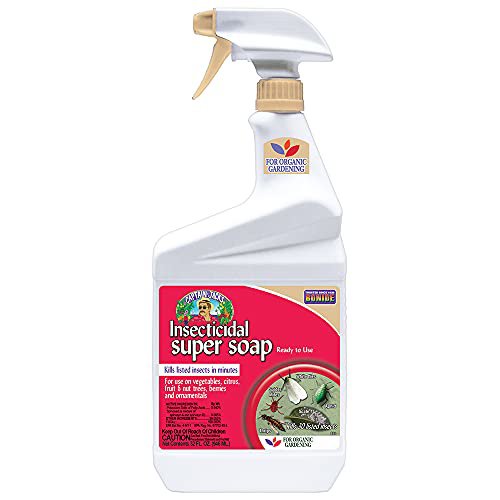
Aphids are sap-sucking insects that inject saliva into the plant's phloem, secreting a sugary substance known as honeydew. This residue creates the characteristic sticky film on the leaves of Himalayan Hydrangeas.
Scale insects attach themselves to the stems and leaf petioles of Hydrangea heteromalla, feeding on sap and excreting honeydew. This can lead to a sticky residue that often attracts sooty mold.
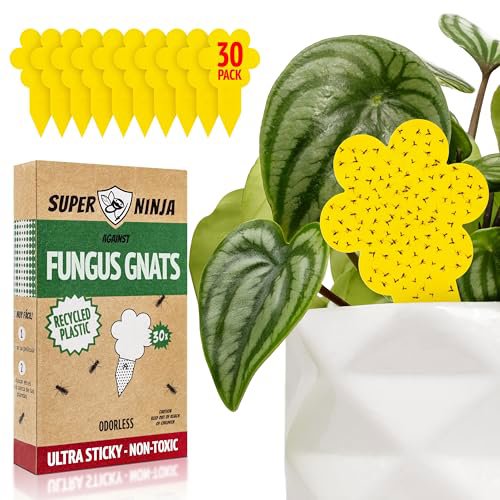
Whiteflies inhabit the undersides of leaves and excrete honeydew as they feed. A sudden cloud of tiny white insects when moving the plant is a strong indicator.
While not the primary cause of stickiness, sooty mold grows on existing honeydew produced by pests. It appears as a black, powdery coating that can block photosynthesis in this species.
Your plant might also be experiencing one of these issues:

 English
 Italiano