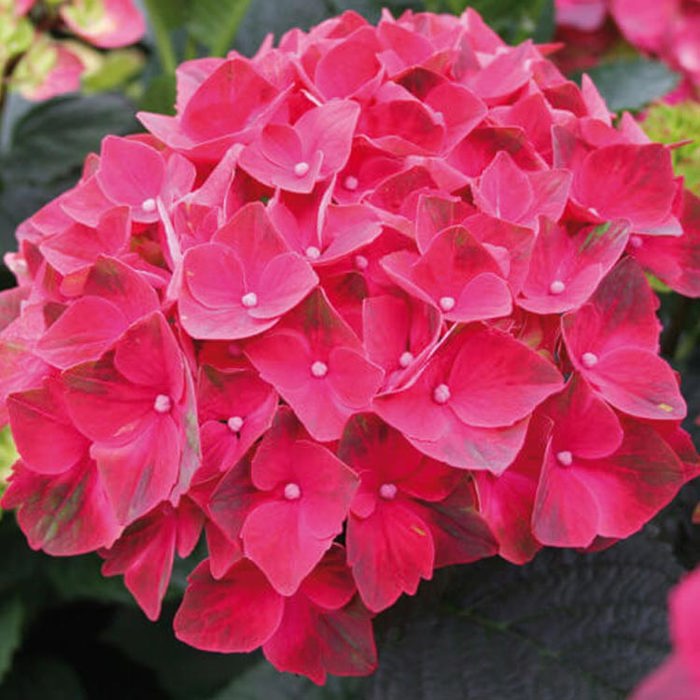
Why does your Hydrangea macrophylla Magical Crimson have sticky leaves? Diagnose the cause and fix it with our step-by-step guide.
Aphids are small, sap-sucking insects that congregate on new growth and flower buds of Hydrangeas. They excrete 'honeydew,' a sticky, sugary substance that coats the leaves.
Scale insects attach themselves to the stems and leaf petioles of Hydrangeas, feeding on sap. Like aphids, they produce honeydew that results in a sticky residue on the foliage.
Whiteflies live on the undersides of Hydrangea leaves and excrete honeydew. This substance can cause a sticky film that may eventually lead to the growth of black sooty mold.
While not the primary cause, sooty mold is a fungus that grows on the honeydew left by sucking insects. It appears as a dark, crusty layer that can make leaves feel tacky.
Your plant might also be experiencing one of these issues:

 English
 Italiano
