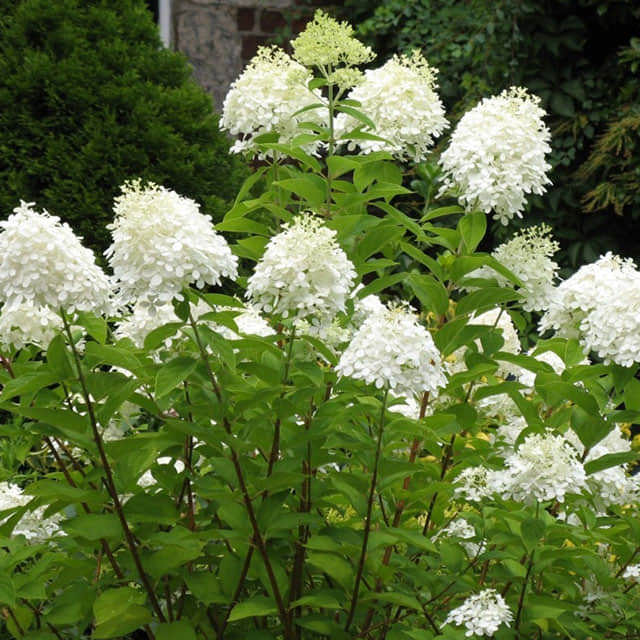
Why does your Hydrangea paniculata have drooping leaves? Diagnose the cause and fix it with our step-by-step guide.
Panicle hydrangeas have large, thin leaves with high transpiration rates; if the soil dries out too quickly, the plant loses turgor pressure causing wilting. This is common during hot afternoon sun when evaporation exceeds root uptake.
Excessive soil moisture or poor drainage leads to anaerobic conditions, causing root decay which prevents the plant from transporting water to the leaves. This results in wilting that mimics drought symptoms.
Extreme temperatures can cause the hydrangea to wilt as a defense mechanism to reduce surface area exposed to the sun. This is often temporary and occurs during the hottest part of the day.
While primarily known for white spots, severe fungal infections can weaken the vascular system of the panicle hydrangea. This stress can lead to general leaf limpness and reduced vigor.
Your plant might also be experiencing one of these issues:

 English
 Italiano