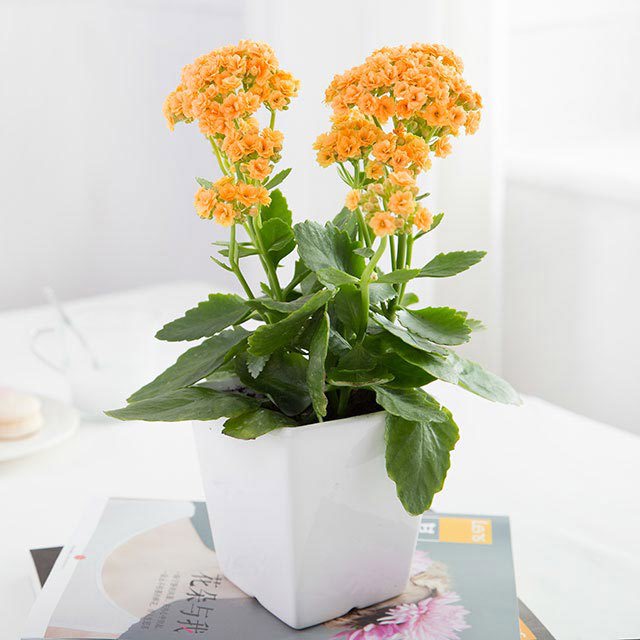
Why does your Kalanchoe blossfeldiana have white powder? Diagnose the cause and fix it with our step-by-step guide.
This fungal disease thrives in high humidity and poor air circulation around the Kalanchoe foliage. It manifests as a white, flour-like coating on leaves and can eventually cause leaf distortion or premature dropping.
These small, soft-bodied insects secrete a white, waxy substance that looks like powder or cottony clumps, often found in leaf axils. They suck the sap from the Kalanchoe, leading to yellowing and stunted growth.
Excessive fertilization or hard water can leave white, crusty deposits on the soil surface and sometimes the leaf edges. This is not a biological pathogen but an accumulation of calcium or magnesium salts.
In moist conditions, Botrytis can cause greyish-white fuzzy patches on flower buds and foliage. While often appearing 'fuzzy' rather than 'powdery,' it can be mistaken for mildew in early stages.
Your plant might also be experiencing one of these issues:

 English
 Italiano


