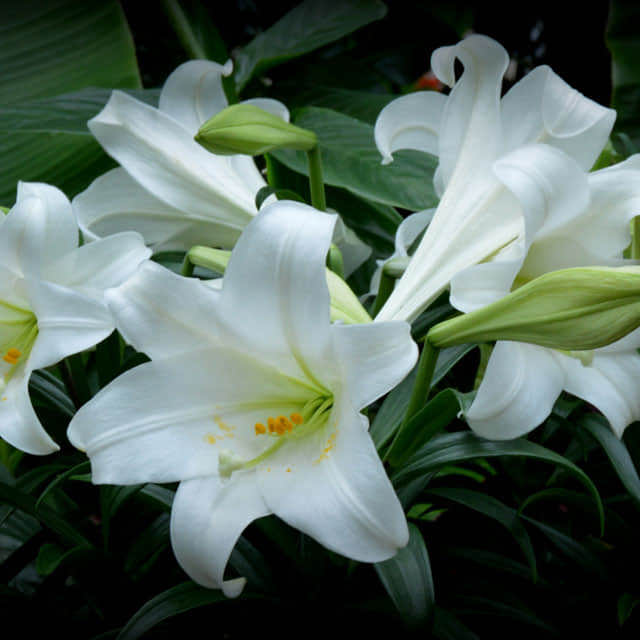
Why does your Lilium longiflorum have fine webbing? Diagnose the cause and fix it with our step-by-step guide.
This is the most common cause of fine webbing on Easter Lilies, especially in low-humidity indoor environments. These arachnids pierce cell walls to feed, leaving behind characteristic silk webs and stippled white/yellow spots on the leaves.
While primarily causing blisters or bumps, extreme cell rupture from uneven water uptake can sometimes lead to secondary fungal growth and silken textures on the leaf surface. This occurs when the Lilium's roots take up more water than the leaves can transpire.
Certain species of microscopic mites can create a fine, dusty web-like appearance around the base of Lily blooms or leaf axils. This is often associated with high humidity and organic debris accumulation near the bulb.
Your plant might also be experiencing one of these issues:

 English
 Italiano