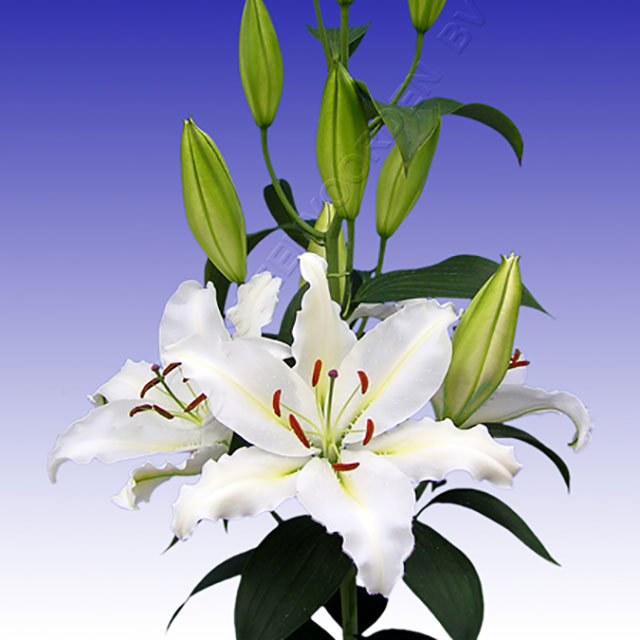
Why does your Lilium orientalis Alma Ata have yellow leaves? Diagnose the cause and fix it with our step-by-step guide.
This fungal pathogen thrives in the humid microclimates favored by Oriental lilies. It causes leaves to turn yellow and eventually develop necrotic brown spots, often accompanied by a grayish mold.
Oriental lilies require well-draining soil; excessive moisture leads to Phytophthora or Pythium, which destroys root tissue. This prevents the bulb from transporting nutrients, causing the lower leaves to chlorose and turn yellow.
Lilies have high nutrient demands during their active growth phase. A lack of nitrogen causes older, lower leaves to lose chlorophyll and turn uniformly yellow before progressing up the stem.
This virus can cause systemic chlorosis in 'Alma Ata' specimens. It often manifests as yellowing mottled with lighter green patches, which can stunt the development of the large blooms characteristic of this cultivar.
Your plant might also be experiencing one of these issues:

 English
 Italiano