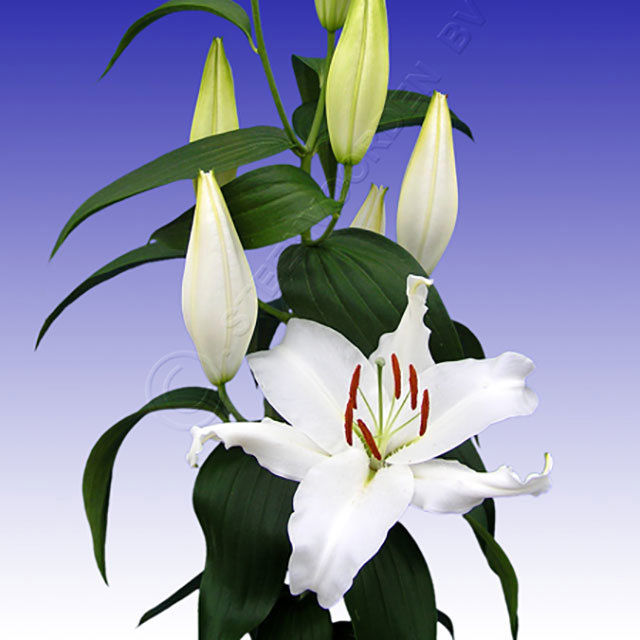
Lilium orientalis Mothers Choice White Cottony Spots
eco White Cottony Spots

Lilium orientalis Mothers Choice – White Cottony Spots

Why does your Lilium orientalis Mothers Choice have white cottony spots? Diagnose the cause and fix it with our step-by-step guide.

search Possible Causes

error

Mealybugs

These small insects secrete a white, waxy, cottony substance to protect themselves as they feed on the sap of the lily stems and buds. They often congregate in the crevices of the 'Mother's Choice' foliage or where the leaves meet the stem.

Very Common
lightbulb
How to confirm: Inspect the undersides of leaves and stem nodes for tiny, slow-moving insects covered in white fuzz.
build How to fix it
shopping_cart Recommended Products
1 Isolate the lily from other plants immediately to prevent the mealybugs from spreading to your entire collection.
2 Treat the infestation by spraying the plant with an organic insecticide/miticide to kill the insects and their waxy coating.
3 Use a cotton swab dipped in isopropyl alcohol to manually remove any visible white cottony clusters from the crevices of the stems and leaves.
warning

Botrytis cinerea (Gray Mold)

While typically appearing as fuzzy gray mold, early stages or specific humidity conditions can present as whitish, soft patches on the petals or leaves. High humidity in dense oriental lily beds facilitates this fungal pathogen.

Common
lightbulb
How to confirm: Check if the white spots are accompanied by soft, decaying tissue or brown necrotic lesions on the flower buds.
build How to fix it
shopping_cart Recommended Products
1 Remove and discard all infected petals and leaves immediately to prevent the fungal spores from spreading to healthy tissue.
2 Apply an organic fungicide to the affected areas to control the spread of the pathogen.
3 Improve air circulation around your lilies by thinning out dense foliage and reducing humidity levels in the planting area.
warning

Powdery Mildew

This fungal disease manifests as a white, flour-like coating on the surface of the leaves. It thrives in environments with high humidity but dry leaf surfaces, common in oriental lily plantings.

Common
lightbulb
How to confirm: Rub the white spots with your finger; if they wipe off easily and leave a pale patch underneath, it is likely powdery mildew.
build How to fix it
shopping_cart Recommended Products
1 Apply an organic fungicide to the affected leaves to eliminate the powdery mildew fungus and prevent further spread.
2 Improve air circulation around the lilies and avoid overhead watering to ensure leaf surfaces remain dry, reducing the humidity levels that favor fungal growth.
3 Prune and dispose of heavily infected leaves to prevent the spores from contaminating healthy parts of the plant or neighboring lilies.
warning

Woolly Aphids

Similar to mealybugs, these aphids produce a white, cottony appearance due to the wax they secrete. They can cause the lily buds to deform or fail to open properly.

Common
lightbulb
How to confirm: Look for clusters of small insects on the newest growth and check for sticky honeydew residue on the leaves below.
build How to fix it
shopping_cart Recommended Products
1 Apply an organic insecticide spray to the lily to eliminate the woolly aphids and remove their protective wax coating.
2 Carefully prune and discard any heavily infested lily buds or stems to prevent the aphids from spreading to healthy parts of the plant.
3 Monitor the plant closely using a moisture meter to ensure the soil remains at an optimal level, as stressed plants are more susceptible to pest attacks.

Other Lilium orientalis Mothers Choice problems

Your plant might also be experiencing one of these issues:

local_hospital All symptoms eco All plants with white cottony spots
favorite


