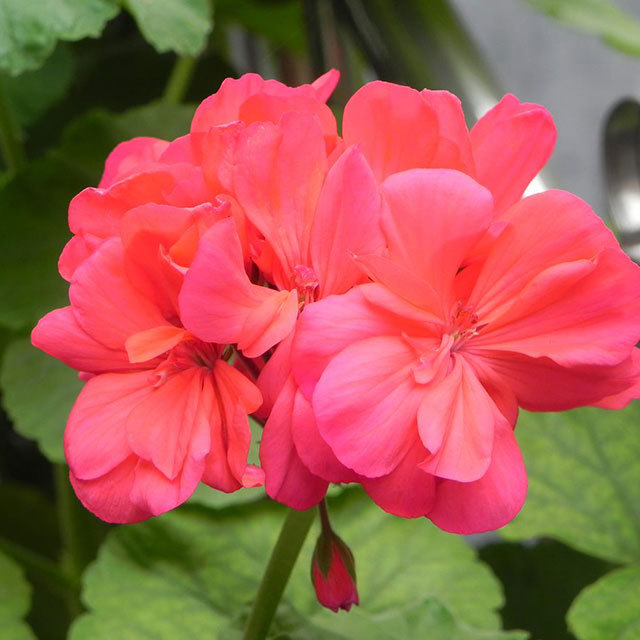
Pelargonium × hortorum Bailey Leggy Stems
eco Leggy Stems

Pelargonium × hortorum Bailey – Leggy Stems

Why does your Pelargonium × hortorum Bailey have leggy stems? Diagnose the cause and fix it with our step-by-step guide.

search Possible Causes

error

Insufficient Light Intensity

Zonal Geraniums are sun-loving plants that require high light levels to maintain compact growth. When light is inadequate, the plant undergoes etiolation, stretching its internodes to search for a light source.

Very Common
lightbulb
How to confirm: Observe if the stems are pale and elongated while the leaves remain small or spaced far apart.
build How to fix it
shopping_cart Recommended Products
1 Move your Geranium to a location with much higher light intensity, such as a south-facing window or a spot with direct sunlight.
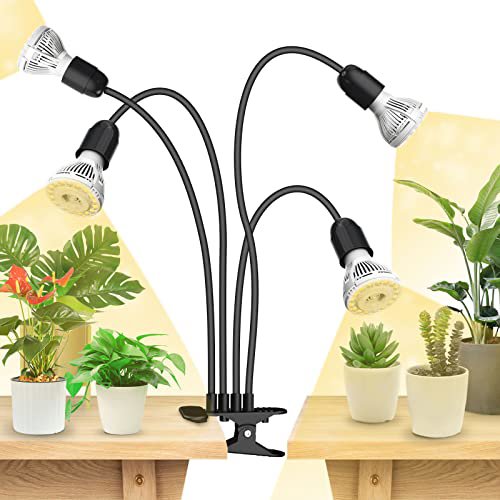
2 Supplement with a full-spectrum grow light to provide the necessary intensity for compact growth and to prevent further stretching.
3 Prune back the elongated, leggy stems to encourage new, bushier growth from the base of the plant.
warning

Overwatering and Poor Drainage

Excessive moisture in the substrate can lead to weak, succulent stem growth. This often occurs when the medium stays saturated, causing the plant to prioritize rapid, weak cellular expansion over structural strength.

Common
lightbulb
How to confirm: Touch the soil; if it remains damp long after watering, your pot may lack adequate drainage holes.
build How to fix it
shopping_cart Recommended Products
1 Immediately reduce watering frequency and allow the top inch of soil to dry out completely before watering again to prevent further stem weakening.
2 Repot the plant into a container with superior drainage and use a well-aerated potting medium, such as a mix containing perlite, to ensure moisture does not stagnate around the roots.
3 Prune back the elongated, leggy stems to encourage bushier, more structural growth and improve airflow around the base of the plant.
warning

High Nitrogen Fertilization

An imbalance in fertilizer, specifically an excess of nitrogen, promotes rapid vegetative growth at the expense of stem rigidity. This results in lush but structurally weak and spindly foliage.

Common
lightbulb
How to confirm: Review your recent fertilizer application to see if it was a high-nitrogen formula (high first number in N-P-K).
build How to fix it
shopping_cart Recommended Products
1 Flush the soil with plenty of fresh water to leach out excess nitrogen salts from the root zone.
2 Prune back the long, spindly stems to a node to encourage bushier, more compact growth.
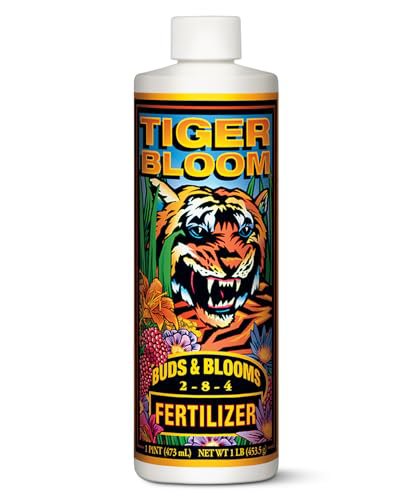
3 Switch to a fertilizer with a lower nitrogen ratio, such as a high-phosphorus formula, to support stronger stems and blooms.
warning

Temperature Fluctuations

Excessively warm nighttime temperatures can accelerate metabolic rates in Pelargoniums, leading to rapid, elongated growth that lacks the density of cooler-climate growth.

Common
lightbulb
How to confirm: Check if the plant is kept near heat vents or in a greenhouse environment that stays consistently warm at night.
build How to fix it
shopping_cart Recommended Products
1 Stabilize the environment by maintaining consistent nighttime temperatures, ideally between 55°F and 65°F, to prevent rapid, weak stem elongation.
2 Increase light exposure using a full-spectrum grow light to provide the energy needed for denser, more compact growth.
3 Prune the elongated, leggy stems using sharp, clean shears to encourage new, bushier growth from the base.

Other Pelargonium × hortorum Bailey problems

Your plant might also be experiencing one of these issues:

local_hospital All symptoms eco All plants with leggy stems
favorite