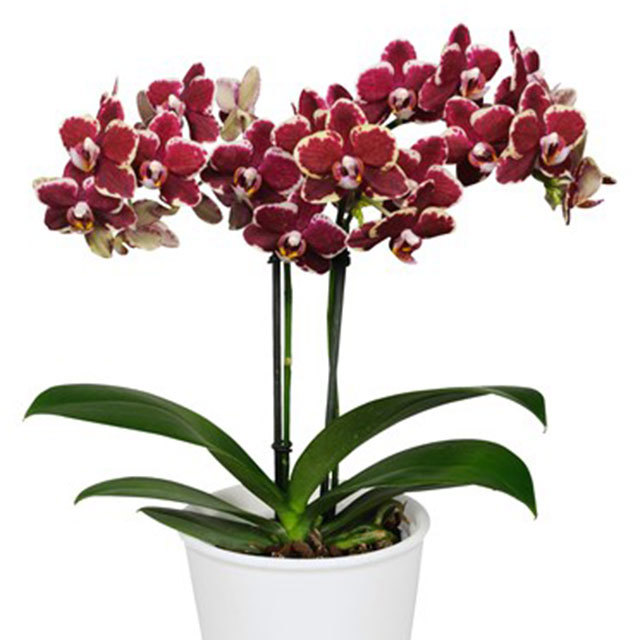
Phalaenopsis Bellinzona Fine Webbing
eco Fine Webbing

Phalaenopsis Bellinzona – Fine Webbing

Why does your Phalaenopsis Bellinzona have fine webbing? Diagnose the cause and fix it with our step-by-step guide.

search Possible Causes

error

Spider Mites (Tetranychidae)

The presence of fine, silk-like webbing is the hallmark sign of a spider mite infestation. These microscopic pests pierce the Phalaenopsis leaf cells to suck out nutrients, causing stippling and eventual chlorosis.

Very Common
lightbulb
How to confirm: Hold a white piece of paper under a leaf and tap it sharply to see if tiny specks fall off and move.
build How to fix it
shopping_cart Recommended Products
1 Immediately spray the orchid leaves, including the undersides, with an organic insecticide to eliminate existing mites and eggs.
2 Increase humidity around the plant and wipe leaves with a damp cloth to physically remove webbing and disrupt the mites' habitat.
3 Isolate the infested orchid from other plants to prevent the mites from spreading via the fine silk webbing.
warning

Low Humidity/Dry Environment

While webbing is usually biological, extremely low humidity can cause the silk produced by existing mite populations to become more visible and 'stiff'. Phalaenopsis orchids require much higher ambient moisture than most indoor houseplants.

Common
lightbulb
How to confirm: Check your hygrometer; levels should ideally be consistently between 50% and 70% for this cultivar.
build How to fix it
shopping_cart Recommended Products
1 Inspect the undersides of leaves for tiny moving dots or webs to confirm if spider mites are present; if found, treat the plant with an organic miticide.
2 Increase ambient humidity around the orchid by using a pebble tray or a humidifier to prevent the silk from becoming brittle and visible.
3 Mist the orchid leaves regularly with a fine spray to maintain moisture levels, but ensure the crown remains dry to prevent rot.
warning

Cheesman's Mites or Other Micro-Arachnids

Other species of small mites can inhabit the crevices of orchid leaves and flower spikes, producing fine webbing as they migrate through the plant tissue.

Common
lightbulb
How to confirm: Use a magnifying glass to inspect the underside of the leaves and the base of the orchid spikes for moving organisms.
build How to fix it
shopping_cart Recommended Products
1 Isolate the orchid immediately to prevent the mites from spreading to other plants in your collection.
2 Treat the plant with an organic miticide or neem oil spray to eliminate the mites and their eggs.
3 Gently wipe the leaves and crevices with a damp cloth to physically remove webbing and remaining pests.

Other Phalaenopsis Bellinzona problems

Your plant might also be experiencing one of these issues:

local_hospital All symptoms eco All plants with fine webbing
favorite