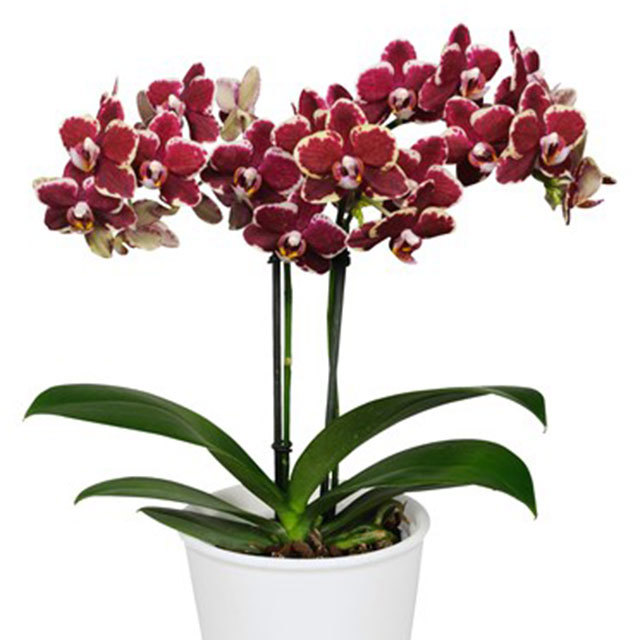
Phalaenopsis Bellinzona Sticky Leaves
eco Sticky Leaves

Phalaenopsis Bellinzona – Sticky Leaves

Why does your Phalaenopsis Bellinzona have sticky leaves? Diagnose the cause and fix it with our step-by-step guide.

search Possible Causes

error

Scale Insect Infestation

Scale insects attach themselves to the underside or stems of the Phalaenopsis, sucking sap and excreting 'honeydew,' a sticky substance. This residue can lead to secondary growth like sooty mold on the leaves.

Very Common
lightbulb
How to confirm: Inspect the leaf undersides and stem junctions for small, hard, brownish bumps that do not move.
build How to fix it
shopping_cart Recommended Products
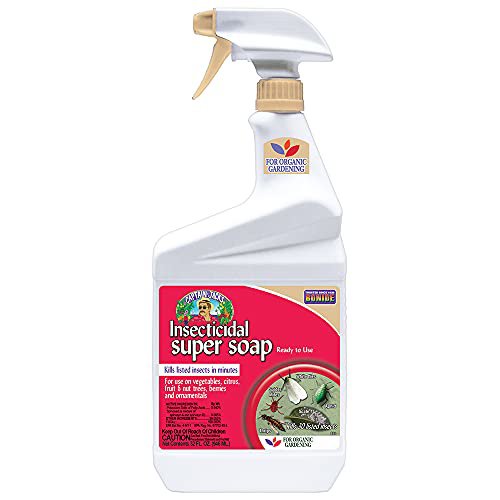
1 Treat the orchid with an organic insecticide to eliminate the scale insects and stop the production of honeydew.
2 Manually remove visible scale insects from the undersides of leaves and stems using a cotton swab dipped in isopropyl alcohol.
3 Wipe the sticky residue and any secondary sooty mold from the leaves with a soft, damp cloth to allow the plant to breathe.
error

Aphid Infestation

Aphids are soft-bodied insects that congregate on new growth and flower buds of Phalaenopsis orchids, secreting sticky honeydew as they feed on plant fluids.

Very Common
lightbulb
How to confirm: Look for tiny, pear-shaped green or black insects clustered near the tender base of new leaves or flower spikes.
build How to fix it
shopping_cart Recommended Products
1 Immediately treat the orchid with an organic insecticide to eliminate the aphid population and stop the production of honeydew.
2 Wipe the sticky residue off the leaves using a soft cloth dampened with water or insecticidal soap to prevent fungal growth.
3 Inspect new growth and flower buds closely, and if infestation persists, apply a targeted spray to the undersides of leaves.
warning

Mealybug Infestation

Mealybugs produce a sticky residue while feeding on orchid tissues, often accompanied by white, cottony masses in the crevices of the plant.

Common
lightbulb
How to confirm: Check the leaf axils and crown for small, white, waxy clusters that can be wiped away with a cotton swab.
build How to fix it
shopping_cart Recommended Products
1 Isolate the orchid immediately to prevent the spread of mealybugs to other plants and treat the infestation with an organic insecticide spray.
2 Use a cotton swab dipped in isopropyl alcohol to manually remove visible white, cottony masses from the leaf crevices and stem joints.
3 Wipe the sticky residue off the leaves with a soft cloth and fresh water to help the plant breathe and prevent fungal growth.
warning

Excessive Fertilization (Salt Buildup)

Over-application of orchid-specific fertilizers can lead to mineral salt accumulation on the leaf surface, which may appear as a sticky or crusty residue.

Common
lightbulb
How to confirm: Check for white, crystalline deposits on the leaf edges or substrate following recent fertilization cycles.
build How to fix it
shopping_cart Recommended Products
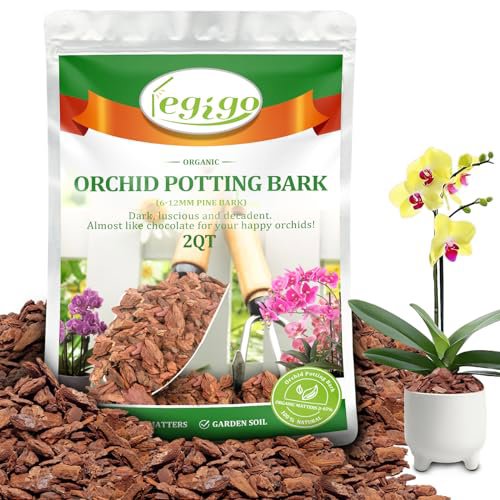
1 Flush the orchid's potting medium thoroughly with distilled or rainwater to leach out accumulated mineral salts from the roots and substrate.
2 Gently wipe the leaves with a damp, soft cloth to remove the sticky residue and prevent potential leaf burn or pest attraction.
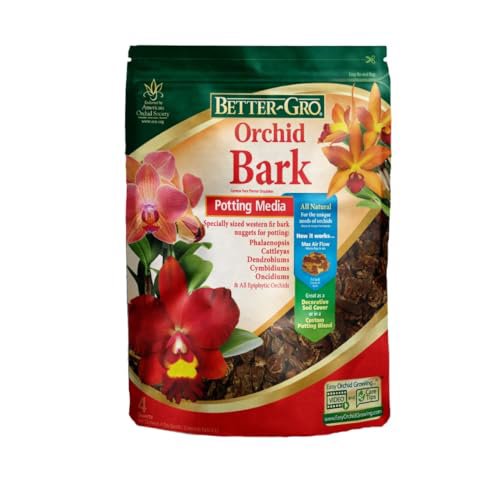
3 Transition to a much weaker fertilizer dilution and ensure you are using a high-quality orchid-specific medium to prevent future salt buildup.

Other Phalaenopsis Bellinzona problems

Your plant might also be experiencing one of these issues:

local_hospital All symptoms eco All plants with sticky leaves
favorite