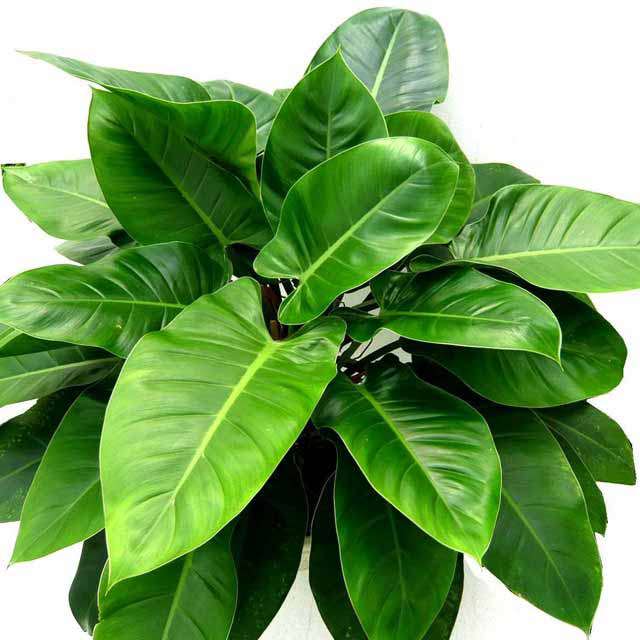
Philodendron Imperial Green Sticky Leaves
eco Sticky Leaves

Philodendron Imperial Green – Sticky Leaves

Why does your Philodendron Imperial Green have sticky leaves? Diagnose the cause and fix it with our step-by-step guide.

search Possible Causes

error

Aphid Infestation

Aphids are sap-sucking insects that inject excess honeydew onto the leaves of Philodendrons. This sticky substance often attracts ants and can lead to secondary sooty mold growth on the foliage.

Very Common
lightbulb
How to confirm: Inspect the undersides of the leaves and new growth for tiny, soft-bodied green or black insects.
build How to fix it
shopping_cart Recommended Products
1 Apply an organic insecticide to eliminate the aphid population and stop the production of honeydew.
2 Wipe the leaves with a damp cloth to remove the sticky residue and prevent the development of sooty mold.
3 Monitor the plant using yellow sticky traps to capture any remaining flying insects or secondary pests like whiteflies.
error

Scale Insects

Scale insects attach themselves to the stems and leaf undersides of your Imperial Green, secreting honeydew as they feed on plant fluids. This results in a persistent sticky film across the leaf surface.

Very Common
lightbulb
How to confirm: Look for small, hard, brownish bumps stationary on the stems or leaf petioles that do not move when prodded.
build How to fix it
shopping_cart Recommended Products
1 Treat the plant with an organic insecticide to eliminate the scale insects and stop the production of honeydew.
2 Wipe the sticky residue off the leaves using a soft cloth dampened with water or insecticidal soap to prevent fungal growth.
3 Inspect the undersides of leaves and stems for any remaining scale pests and remove them manually with a cotton swab dipped in alcohol.
warning

Mealybugs

Mealybugs produce a sugary excretion as they feed on the Philodendron's vascular system. While they are often identified by white cottony masses, their presence can cause a sticky residue on nearby leaves.

Common
lightbulb
How to confirm: Search for white, waxy, cotton-like clusters in the leaf axils where the leaf meets the stem.
build How to fix it
shopping_cart Recommended Products
1 Isolate the plant immediately to prevent the spread of mealybugs to other houseplants.
2 Treat the plant with an organic insecticide spray to eliminate existing pests and larvae.
3 Wipe the sticky residue and any visible white cottony masses off the leaves using a soft cloth dipped in insecticidal soap or alcohol.
warning

Sap Exudation (Rare)

In cases of physical damage to the stems or petioles of the Philodendron, the plant may release internal sap. This sap can run down the leaves and dry into a sticky residue.

Common
lightbulb
How to confirm: Check for any recent mechanical damage, cuts, or broken stems on the plant's structure.
build How to fix it
shopping_cart Recommended Products
1 Gently wipe the sticky residue from the leaves using a soft cloth dampened with lukewarm water to prevent fungal growth.
2 Inspect the stems and petioles for any physical breaks, cuts, or crushed areas that may be causing the sap leak.
3 Prune any severely damaged or broken stems using sterilized shears to prevent further sap loss and potential infection.

Other Philodendron Imperial Green problems

Your plant might also be experiencing one of these issues:

local_hospital All symptoms eco All plants with sticky leaves
favorite


