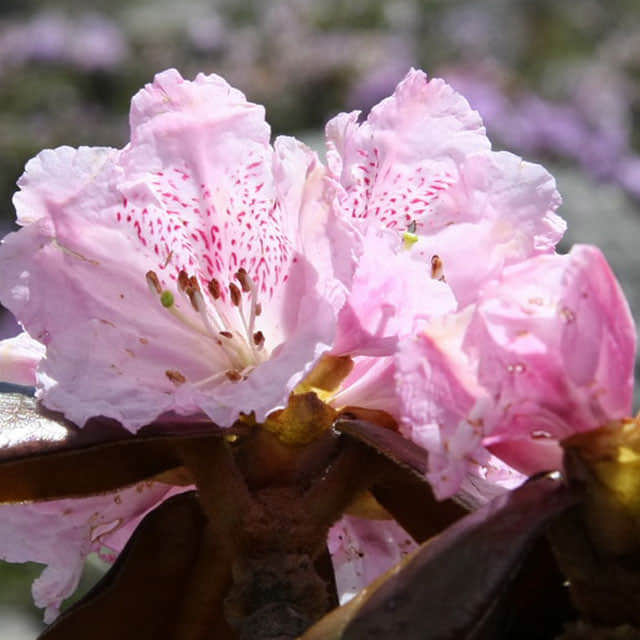
Rhododendron bureavii Brown Leaf Tips
eco Brown Leaf Tips

Rhododendron bureavii – Brown Leaf Tips

Why does your Rhododendron bureavii have brown leaf tips? Diagnose the cause and fix it with our step-by-step guide.

search Possible Causes

error

Salt or Fertilizer Accumulation

Rhododendrons are sensitive to high concentrations of salts and minerals in soil. Excess fertilizer buildup or hard water irrigation causes osmotic stress, leading to necrosis at the leaf margins.

Very Common
lightbulb
How to confirm: Check if you have recently applied heavy doses of fertilizer or if you use tap water with high mineral content.
build How to fix it
shopping_cart Recommended Products
1 Flush the soil thoroughly with large amounts of distilled or rainwater to leach out accumulated mineral salts and fertilizers.
2 Repot the plant in fresh, acid-loving soil to provide a clean growing medium free of salt buildup.
3 Use a soil moisture meter to ensure you are watering deeply enough to facilitate the leaching process without overwatering.
error

Improper Soil Moisture (Drought Stress)

Bureau's Rhododendron requires consistently moist but well-draining soil. When the substrate dries out completely, the plant cannot transport water to the furthest extremities, causing leaf tip burn.

Very Common
lightbulb
How to confirm: Stick your finger two inches into the soil to see if it feels dry and brittle.
build How to fix it
shopping_cart Recommended Products
1 Check the soil moisture level immediately using a moisture meter to determine the depth of the drought stress.
2 Apply a deep, thorough watering to rehydrate the root ball, ensuring the water reaches the bottom of the container.
3 Amend the existing soil with organic matter or perlite to improve moisture retention and prevent future drying cycles.
warning

Root Rot (Phytophthora)

While brown tips often suggest dryness, poorly draining soil can lead to root rot. As roots decay, they lose the ability to supply water to the leaves, mimicking drought symptoms through tip necrosis.

Common
lightbulb
How to confirm: Gently lift the edge of the topsoil to check if the roots are dark, slimy, or emitting an odor.
build How to fix it
shopping_cart Recommended Products
1 Inspect the root system for mushy, dark, or foul-smelling roots and prune away any decayed sections using sterilized tools.
2 Repot the plant in a highly aerated, well-draining medium specifically formulated for acid-loving plants to prevent future waterlogging.
3 Ensure the new container has excellent drainage and use a moisture meter to avoid overwatering the soil.
warning

Low Humidity/Environmental Desiccation

In very dry indoor or greenhouse environments, the transpiration rate can exceed water uptake. This causes the edges of the leaves to desiccate and turn brown.

Common
lightbulb
How to confirm: Monitor if the browning coincides with periods of low ambient humidity or high heat exposure.
build How to fix it
shopping_cart Recommended Products
1 Increase local humidity around the plant by using a pebble tray or a fine misting spray bottle to prevent further leaf desiccation.
2 Monitor soil moisture levels closely to ensure the plant is not drying out too quickly, using a moisture meter to maintain consistent hydration.
3 If the plant is in a dry indoor setting, consider using a humidifier or grouping it with other plants to create a more humid microclimate.

Other Rhododendron bureavii problems

Your plant might also be experiencing one of these issues:

local_hospital All symptoms eco All plants with brown leaf tips
favorite