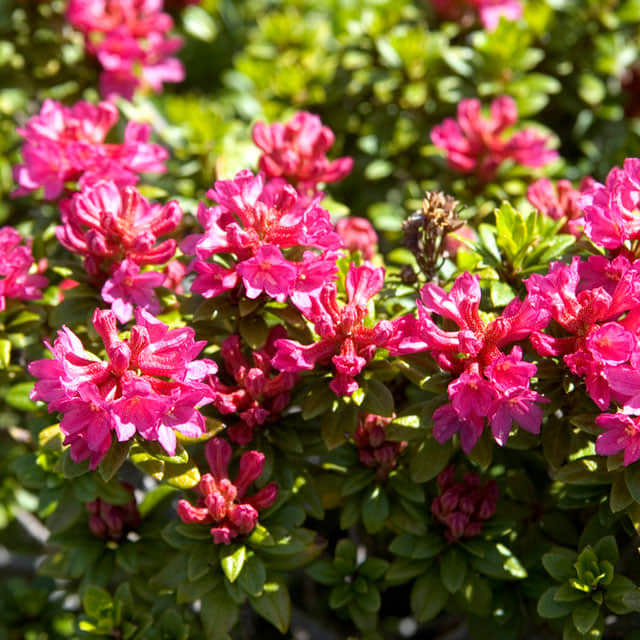
Rhododendron ferrugineum Fine Webbing
eco Fine Webbing

Rhododendron ferrugineum – Fine Webbing

Why does your Rhododendron ferrugineum have fine webbing? Diagnose the cause and fix it with our step-by-step guide.

search Possible Causes

error

Two-Spotted Spider Mite (Tetranychus urticae)

These microscopic arachnids thrive in the warm, dry conditions that can occur even in alpine environments during heat spikes. They pierce the cell walls of the Rhododendron leaves to suck out chlorophyll, leaving behind characteristic fine silk webbing and stippled yellowing.

Very Common
lightbulb
How to confirm: Hold a white piece of paper underneath a leaf and tap it sharply to see if tiny crawling dots fall off.
build How to fix it
shopping_cart Recommended Products
1 Apply an organic insecticide/miticide spray to the plant to eliminate the spider mite population and destroy eggs.
2 Increase humidity around the plant and ensure the soil remains consistently moist to create an environment unfavorable for mite reproduction.
3 Prune and dispose of heavily infested or dead foliage to prevent the mites from spreading to healthy parts of the plant.
warning

Edible/Common Spider Mites (Tenuipalpidae)

While less aggressive than the two-spotted variety, eriophyid mites create very fine, almost invisible webbing around leaf margins and buds. This can lead to leaf distortion and premature senescence in alpine rose species.

Common
lightbulb
How to confirm: Examine the underside of new growth and leaf edges with a magnifying glass for minute, translucent structures.
build How to fix it
shopping_cart Recommended Products
1 Apply an organic miticide or insecticide spray to the plant to eliminate the mite population and destroy any remaining eggs.
2 Prune and dispose of any heavily distorted or severely infested leaves and buds to prevent the mites from spreading to healthy parts of the plant.
3 Increase humidity around the plant by misting the foliage regularly, as spider mites thrive in dry environments.
warning

Leaf Roller Caterpillar Larvae

Certain lepidopteran larvae create silk shelters by folding or rolling the Rhododendron leaves together. While the primary symptom is leaf deformation, the structural integrity of the 'roll' involves fine silken webbing.

Common
lightbulb
How to confirm: Gently unfold any rolled or curled leaves to check for small green caterpillars or frass (insect excrement) inside.
build How to fix it
shopping_cart Recommended Products
1 Identify and manually remove any visible caterpillar larvae or silk-wrapped leaves from the plant to stop further leaf rolling.
2 Apply an organic insecticide spray to the foliage to eliminate any remaining larvae and prevent new infestations.
3 Monitor the plant closely for new webbing and use a targeted spray if the infestation persists.

Other Rhododendron ferrugineum problems

Your plant might also be experiencing one of these issues:

local_hospital All symptoms eco All plants with fine webbing
favorite